Home » Yoga Blog » Beginner Yoga Blog » 20 Practical Tips for Starting Yoga
20 Practical Tips for Starting Yoga
You have rolled out a mat, found a yoga video and put on your favourite workout clothes. Or your pyjamas. Now what?
If the teacher starts using words you do not know, or folds into a shape that seems impossible, it is easy to wonder whether yoga is for you. Please do not give up on the whole thing because one class did not fit.
These tips for starting yoga will help you choose a class, get comfortable and find your own pace. You do not need to be flexible already, buy a whole new wardrobe or remember every pose name. Give yourself permission to be a beginner.
- By: Melissa Berry
- Published:
- Reviewed: October 30, 2026
Your first yoga class checklist
Before your first class, keep it simple:
- Choose a beginner-friendly class and check its pace, length and equipment list.
- Wear comfortable clothes and set up a mat that stays put, or a sturdy chair if the class uses one.
- Clear enough room to move and put the suggested props within reach.
- For an online class, test the link, sound and screen position before it starts.
- Tell the teacher you are new and ask how to take a break or try another option.
The 20 tips below explain the rest. You do not have to remember them all at once.
What can you get from yoga?
People come to yoga for different reasons: moving more comfortably, finding a little quiet, or simply making time for themselves. Research suggests yoga may support balance, sleep and stress management, although results vary. The NCCIH overview of yoga’s benefits and safety is a useful place to separate evidence from big promises.
For more ideas, explore our articles on regular yoga practice and yoga for a calmer mind. You do not need a dramatic goal to start.
20 tips for starting yoga
Start with a beginner-friendly class
My first class was a 90-minute Bikram class in a hot room. I followed the teacher, but I almost passed out. That was quite an introduction! Your first class does not need to be an endurance test.
Read the description rather than choosing by the name alone. Hatha often gives you more time in individual poses; Vinyasa often links poses through flowing movement. Neither name, nor “all levels,” guarantees an easy class.
Our Hatha yoga vs Vinyasa guide explains what to look for. Then check the current online yoga class schedule and ask the teacher whether a class suits someone just starting.
Find a teacher who welcomes beginners
Look for someone who explains things clearly, offers options and gives you room to ask questions. You should feel able to say, “I do not understand that,” without feeling silly.
A specialized class, such as prenatal yoga or yoga for runners, may be worth exploring when it matches your needs. Ask about the teacher’s relevant training and experience. If you have an injury, a health condition or are pregnant, discuss suitable activity with your health care provider and tell the teacher about any restrictions. A class title is not a promise that every movement will suit you.
Choose between recorded videos and live instruction
Free videos and on-demand classes are handy. You can pause, repeat an instruction and practise when it fits your day. There is nothing wrong with starting there.
A live class gives you the chance to ask questions and practise with other people. If the teacher can see you, they may also be able to suggest options, though an online view has limits. Our guide to the benefits of online yoga can help you weigh up the format. Choose the support you need, not just the most impressive-looking video.
Decide whether group or private lessons suit you
Group classes can bring a lovely sense of community. You share the space, the routine and sometimes a laugh when everyone is figuring something out.
Private lessons give you more time to discuss your questions and work at your own pace. They often cost more than a group class. Neither format makes you a better student. Start with the one that fits your budget and the amount of individual attention you want.

Consider a beginner workshop
If you like knowing why you are doing something, a beginner workshop may be a good fit. There is often more room to break down a movement, try it again and ask questions than in a flowing class.
Check the actual description, length and experience level before booking. “Workshop” does not automatically mean beginner-friendly, and you do not need one before you are allowed to join a regular class.
Explore options beyond a fast floor-based class
If getting down onto the floor does not suit you, try chair yoga. Some classes stay seated; others include standing with a chair for support. Check which kind you are choosing.
Christina Raskin’s six seated chair yoga exercises for beginners explain the setup and take you through the movements one at a time. You do not have to graduate to floor poses for your practice to count.
Yin is another style you may encounter, with longer-held poses and less continuous movement. Slower does not always mean easier or more suitable. Ask what the class involves and whether options are available. There is no prize for staying in a pose longer than feels right for you.
Start with what you already have
It is tempting to turn a new interest into a shopping trip. Personally, I would use what you have and buy the minimum. Ask what the class needs before buying a mat, blocks, straps and everything else on the shelf.
Some studios lend or rent equipment. At home, clear a comfortable space and check your online class setup. Invest when you know what you will actually use.
Wear clothes you can move in
Look in your closet before looking at a shopping cart. Choose clothes that let you bend, reach and sit comfortably. Try a forward bend at home: if your shirt falls over your face or a waistband digs in, you have time to change.
Yoga is often practised barefoot, but follow the class guidance and your own needs. You do not need a matching outfit to belong in the room.
Choose a mat that stays put
A useful mat gives you a stable surface. Check that it does not slide on your floor and that your hands and feet feel secure. Price alone will not tell you whether it suits you.
Extra cushioning may make some positions more comfortable, but a very soft surface can make balance harder. Ask the teacher about a folded blanket or another option if kneeling is uncomfortable. Do not keep kneeling through pain just because you bought a thicker mat.

Learn how to use the props you need
Blocks, straps, blankets and bolsters are there to help you find a position that works, not to announce that you are bad at yoga. A block can bring the floor closer to your hands. A folded blanket may make a seated position more comfortable. Ask the teacher which setup suits the movement.
Read about the uses of yoga props and our household prop ideas. Choose substitutes carefully: a soft pillow and a stable weight-bearing block do different jobs. Skip anything that slips, collapses or feels insecure.
Arrive or log in a little early
Give yourself time to find the room, put down your things and settle. Online, open the link and check the sound before the class starts. It is much nicer than wrestling with a password while everyone else is getting comfortable.
If you know you will need to leave early, let the teacher know. Follow the studio’s or online class’s guidance about joining late, microphones and interruptions.
Choose a place where you can see and hear
Beginners do not have to hide in the back row. Choose a spot where you can hear the instructions and see the teacher without twisting around. Ask where to set up if you are unsure.
At home, position the screen before you start. You should not have to strain your neck to watch it. If you are joining with your camera on, check what the teacher can see and keep your practice space clear.
Tell the teacher you are new and ask questions
It is okay not to know what a pose name means. Tell the teacher this is your first class, or that you are new to this style. Ask how they would like you to raise a question during the session.
If an instruction does not make sense, pause rather than guessing your way into it. A useful question can be as simple as, “Where should I put my hands?” or “Is there another way to do this?” You are there to learn.
Take a break in a position that suits you
You are allowed to stop before the teacher says it is break time. You can sit, stand quietly or choose another comfortable position. Then decide whether you want to rejoin.
Child’s Pose is one option, not a safe or comfortable position for everyone. If it bothers your knees, hips or anything else, skip it and ask for an alternative. You do not owe anyone a particular resting shape.

Give yourself a moment to settle
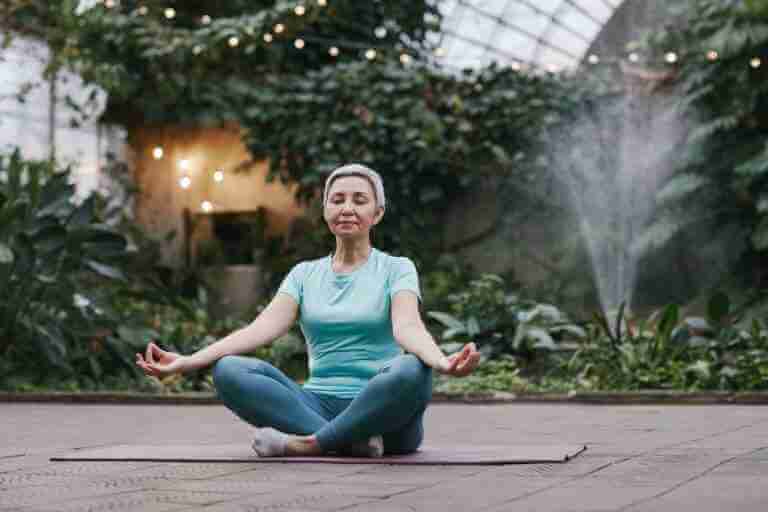
Some classes begin with quiet sitting, a breathing exercise or a short meditation. Others start with movement. Either way, take a moment to notice where you are and how you feel.
You can keep your eyes open if that is more comfortable. If your mind is still working through your grocery list, welcome to being human. Notice it, then return to the instruction in front of you.
Keep your breathing comfortable
There can be a lot to coordinate at first: feet here, hands there, breathe in, breathe out. Start by breathing comfortably rather than holding your breath to get a pose right.
If matching the teacher’s rhythm feels strained, return to your normal breathing and ask for guidance. You do not need forceful breathing or long breath holds to begin yoga.
Make room for a comfortable final rest
Many classes finish with Savasana, sometimes called Corpse Pose, or another period of quiet rest. Give yourself those few minutes instead of treating them as the part to skip.
Lying flat on your back is not the only option. Ask about a supported, side-lying or seated position if needed. The point is to find an appropriate way to rest, not force yourself into someone else’s version of relaxation.
Notice how a movement feels, not how it looks
It is easy to look at the person beside you and decide you should go further. Their body and experience are not yours. You can use a smaller range of movement, take support or leave out a pose.
Do not force yourself through pain. Stop if a movement hurts or you feel unwell, and get appropriate advice if symptoms continue. A teacher can offer options, but you are the one who can say what you are feeling.
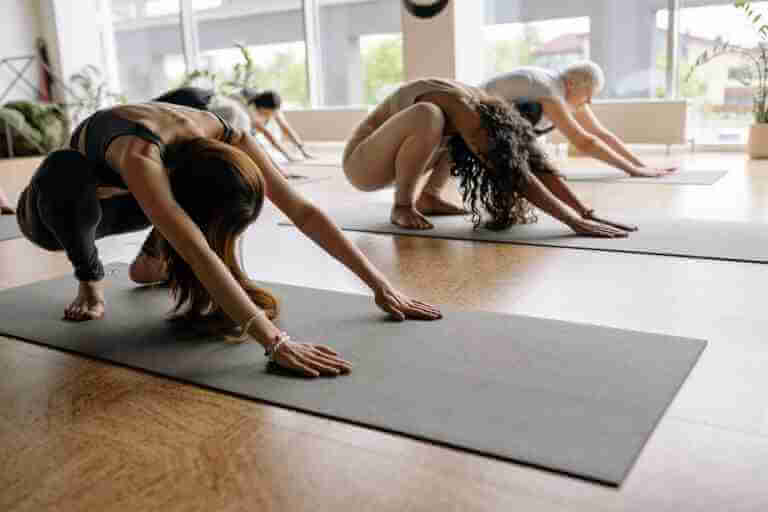
Choose a routine you can repeat
Personally, I would rather make room for 10 or 15 minutes regularly than wait for the perfect day for a long class. Your routine may be different. Start with an amount of time you can realistically keep.
One weekly class or a few short sessions can be a starting point. Explore ways to make time for yoga and build from there. If you miss a day, you have not failed. Pick it up again when you can.
Be patient and leave comparison behind
It is called a practice for a reason. You will learn unfamiliar words, discover movements you enjoy and meet others that do not suit you. You do not need to master them all.
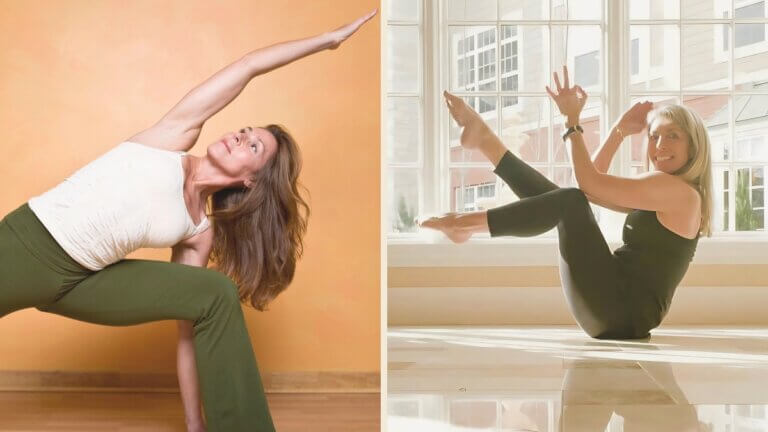
Use the prop even if nobody else does. Take the break. Listen to the instruction rather than guessing what comes next. And please do not judge your first class against a teacher’s photograph. Start where you are and give yourself a chance to enjoy it.

Ready to try your first class?
Choose a class that welcomes beginners, use what you have and tell the teacher when you need another option. That is plenty to start with.
I hope these tips make yoga feel a little less mysterious. You do not have to make it complicated. Find a class that fits, leave room to learn and see how the practice feels for you.

Melissa Berry
I never dreamt of being a yoga teacher, but now that I am and see what people can do, I am hooked. I love taking my students to a level they don’t even know they can reach.
Related Beginner Yoga Blog Articles