If you are comparing Hatha yoga vs Vinyasa, the short answer is pace. Hatha classes usually give you more time in individual poses. Vinyasa classes usually connect poses through flowing, breath-led movement. That is a useful place to start, but it will not tell you how hard the class will be.
A slow class can ask plenty of your legs. A flowing class can leave room to pause. I would pay more attention to how the teacher guides the practice, the options offered, and whether the effort fits your day. The class name is a clue, not the whole answer.
Hatha Yoga vs Vinyasa: The Main Differences
| What to expect | Hatha | Vinyasa |
|---|---|---|
| Pace | Often steadier, with more pauses | Often more continuous, with linked sequences |
| Time in poses | Usually more time to explore each pose | May move through poses or hold them within a flow |
| Breath | Awareness while holding and moving | Breath often helps organise transitions |
| Learning | More time to hear cues and try adjustments | More practice connecting movements |
| Effort | Can be gentle, moderate or strong | Can be gentle, moderate or strong |
One terminology wrinkle is worth clearing up. Hatha has a broader meaning in yoga than the slower class listed on a studio schedule. Here, I am comparing the modern class labels. They describe common teaching approaches, and they overlap a lot.
Yoga Journal’s overview of Hatha yoga describes Hatha as a broad category of physical yoga practices that includes Vinyasa. That broader meaning is different from the class label I am comparing here.
What Is a Hatha Yoga Class Like?
In a typical Hatha class, you move into a pose, spend some time there, and then move on. You have room to notice your footing, breathing, and effort without also remembering the next three movements. If you are still working out where your feet go, that extra time can be quite useful.
For example, in Warrior II you might have time to adjust your stance, explore a comfortable bend in the front knee, and notice whether you are holding your breath. The teacher can offer options before you change sides or move to another pose.
That does not make Hatha a beginner-only practice. Stay in a standing pose for a while, and the difference between slow and easy becomes fairly clear. A teacher can explore balance, strength, breathwork, or a more complex sequence without moving quickly.
Hatha may suit you if you like time to explore a pose, understand the instructions, and make adjustments before moving on. If what you really want is rest, read the description carefully. A strong Hatha class and a gentle or restorative class can ask very different things of you.
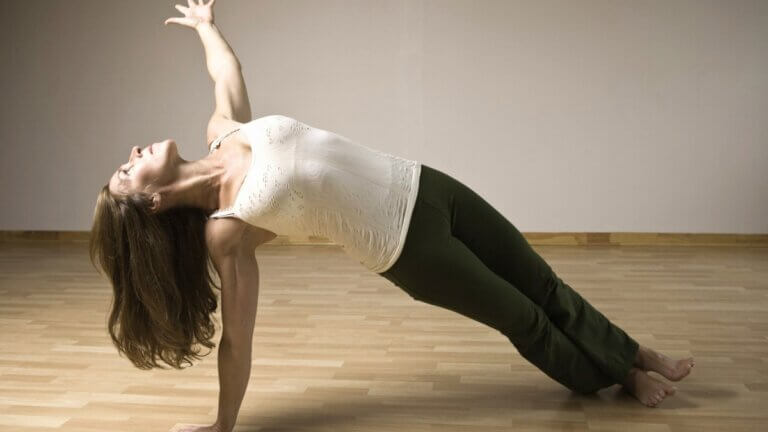
What Is a Vinyasa Yoga Class Like?
In Vinyasa, the connections between poses become a bigger part of the practice. You learn how one movement leads into the next, with your breath setting the rhythm.
For example, you might raise your arms as you inhale, fold forward as you exhale, and continue through a sequence the teacher has introduced. Some movements follow one breath; other poses may be held for several breaths. Flow does not mean rushing.
You may also hear “take a vinyasa.” In many classes, this refers to a transition involving plank, a lowering movement, a backbend, and downward-facing dog. It is one use of the word, not a definition of the entire style. Teacher Maty Ezraty explains this broader meaning in Yoga Journal’s explanation of Vinyasa, describing a step-by-step approach that connects movement and breath.
The transitions count too. Moving repeatedly between the floor and standing, or supporting your weight on your arms, can add effort even when you recognize every pose. I would look for a pace you can follow and options you can actually use. Spending the whole class trying to catch up is not much of an introduction.
Vinyasa may suit you if you enjoy movement, repetition, and learning a sequence through doing it. Slower, stronger flows exist, so class level matters as much as style.
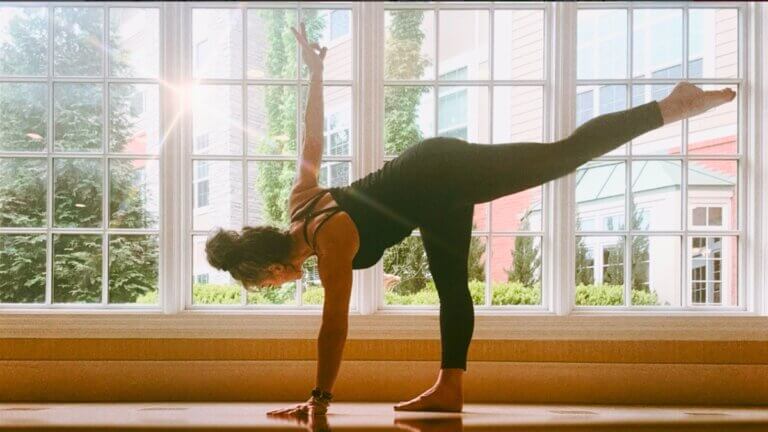
Is Hatha or Vinyasa Better for Beginners?
A beginner Hatha class is often a useful starting point because the pauses give you more time to hear instructions and explore options. However, a clearly taught beginner Vinyasa class can also be a good introduction.
For me, the more useful question is whether the class actually teaches beginners. “All levels” can mean the teacher explains the options carefully. It can also mean you are expected to recognize the poses and make your own adjustments. Those are quite different first classes.
- Does the teacher explain how to enter and leave poses?
- Are alternatives shown before the class moves on?
- Can you pause without losing track of the whole sequence?
- Is the pace manageable while you learn the names and movements?
You can be fit and still not know what the teacher means by Warrior II. Being new to yoga does not mean you need to avoid movement, either. What matters is having enough instruction and time to learn.
How to Choose the Right Class
When choosing between Hatha and Vinyasa, I would start with what you want from the class, then check the description and teacher. There is no prize for selecting the more impressive-sounding option.
- Want time to learn and adjust? Start with beginner or foundations Hatha.
- Enjoy moving through sequences? Look for beginner Vinyasa or slow flow.
- Want a stronger practice? Check the actual intensity. Either style can challenge you.
- Want a quieter session? Look for gentle pacing and fewer demanding transitions, rather than relying on the word Hatha.
- Prefer fewer movements onto your hands? Ask about wrist-bearing poses and alternatives. The style name alone will not answer that question.
Then try a class. I would judge it by more than whether you kept up: could you follow the guidance, make adjustments, and choose a manageable level of effort? Did you enjoy the teacher’s approach enough to come back? Those answers tell you more than the style name.
A challenging class can still feel manageable. A simple one can be the wrong fit for your day. Pause, use a prop, or choose an alternative when you need to. You are still participating.
You can combine both styles throughout your week. A steadier class might give you time to explore a pose that appears in your flowing practice. A Vinyasa class can help you connect movements you have learned individually. For planning that rhythm, see How Often Should You Do Yoga? rather than treating every session as the same workload.
Hatha vs Vinyasa: Frequently Asked Questions
In the broader sense, Vinyasa falls under Hatha as a category of physical yoga practices. On modern class schedules, however, Hatha usually describes a steadier class, while Vinyasa describes flowing sequences. This article compares those class labels.
Not necessarily. A slower Hatha class can include demanding holds, while a gentle Vinyasa class can use simple movements and plenty of pauses. Compare the class level, sequence, and options rather than assuming one style is always easier.
Yes. Choose a beginner or foundations class that explains poses and transitions and offers manageable alternatives. A fast class that assumes familiarity with pose names can be harder to follow, even if you are already physically active.
No. Many classes include Chaturanga as part of a repeated transition, but it isn’t required in every Vinyasa sequence. Ask the teacher about alternatives or skipping the transition if it doesn’t suit your practice.
Yes. You can use both approaches without committing to one. Adjust the frequency and intensity to fit your energy and your other activities. A slower class is not automatically a recovery session if its holds are demanding.
Try Both Without Choosing a Side
You do not need to declare lifelong allegiance to a yoga style. Try one, try the other, and notice what works for you. You can change your mind next week.
At Asana at Home, Nathalie Keiller’s online Hatha yoga classes offer steady, breath-led guidance and options for different experience levels. If flowing practice appeals to you, our class schedule also features Vinyasa with Michelle Burks. Check the current descriptions and schedule to find a class that fits.
I would put more weight on a class you can follow, adapt, and return to than on finding the supposedly perfect style. Hatha and Vinyasa both give you somewhere to start. The practice will tell you more.