Home » Yoga Blog » Yoga Instructor Blog » Why Yoga Students Struggle to Feel Cues | Teaching Embodied Awareness
Why Some Yoga Students Struggle to “Feel It” — And What Teachers Can Do
Many yoga teachers have experienced the moment when a student simply can’t “feel” the cue — no matter how clearly it’s explained or demonstrated. This isn’t a lack of effort or intelligence. More often, it’s a matter of proprioception, nervous system readiness, and how embodied awareness actually develops over time. Understanding this can fundamentally change how you teach — and how your students learn.
- By: Christina Raskin
- Published:
- Reviewed: March 25, 2026
A Teaching Moment That Changed Everything
Several years ago, I had a student who could not, no matter how many times I cued it, feel her pelvis tilt.
I explained it in every way I knew how.
I demonstrated it.
I used imagery.
I used anatomy.
Nothing worked.
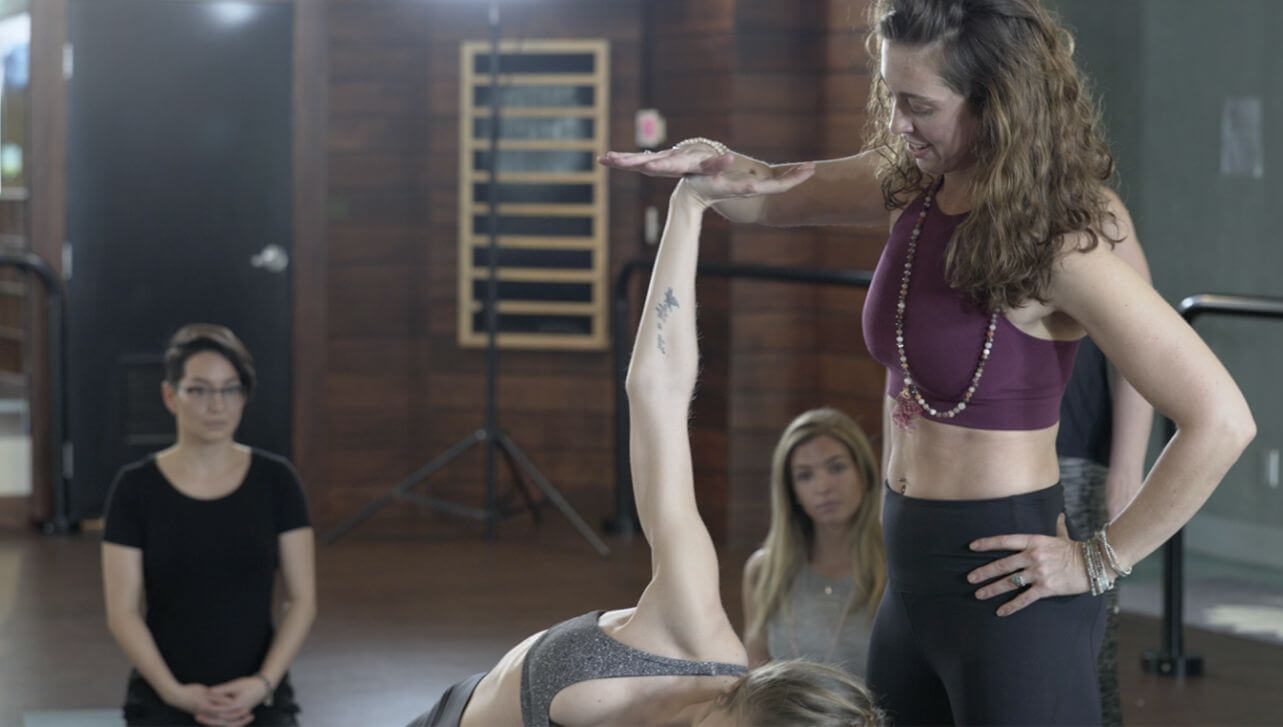
So after class one day, I stood beside her and showed her physically how the pelvis moves on the sagittal plane — how, when the rectus abdominis engages, the hip bones subtly draw toward the ribs.
In that moment, she felt it.
Her eyes lit up.
She finally got it.
And then… the next week, it was gone again.
What I thought would be a quick teaching moment turned into months of repetition, explanation, encouragement, and patience as her body slowly developed the proprioception to truly understand that movement.
That experience changed the way I teach forever.
“Not Feeling It” Is Not Resistance
I’ve heard teachers express this frustration:
“They just aren’t getting it.”
“They aren’t listening.”
“They must not be trying.”
But most of the time, that isn’t true.
Students aren’t ignoring us — they are learning a language their nervous systems may have never been taught before.
They are developing:
- Proprioception
- Interoception
- Coordination
- Sensory awareness
All of these skills develop slowly, gently, and differently for every person.
This is not defiance.
It is development.
Understanding that “not feeling it” is often a nervous system response — not resistance — is a core principle of Trauma Informed Teacher Training
Why Our Own Yoga Practice Matters Here
This is where our own yoga practice must step in.
Because humility, patience, compassion, and curiosity are not just spiritual ideals — they are essential yoga teaching cuing skills.
As teachers, we must remember:
- Our students are not us
- They don’t have our movement history
- They don’t feel what we feel
- They don’t know what we know
And perhaps most importantly:
We also do not know everything.
We do not have all the answers.
We are still learning too.
What Actually Helps Students Develop “Feeling”
Here’s what truly supports embodied learning:
Give Time
Proprioception develops through repetition — not explanation alone.
Make Sensation Tangible
Hands-on cues, self-touch, props, and environmental feedback create sensory anchors.
Use Multiple Teaching Languages
Layer imagery, anatomy, breath, rhythm, and physical exploration.
Normalize the Process
Let students know it’s okay if something doesn’t land right away. Safety allows awareness to grow.
Stay Curious
Every nervous system is different. Teaching is exploration — not correction.
This Is Advanced Yoga Teaching
Teaching people how to feel is subtle work.
It requires patience.
It requires humility.
It requires listening.
It requires presence.
And it transforms yoga from “doing poses” into a process of inhabiting the body with awareness.
While these concepts are often introduced during a 200 Hour Yoga Teacher Training, they tend to deepen with experience, mentorship, and more advanced study.
Ready to Deepen These Skills?
In our 300-Hour Advanced Yoga Teacher Training, we explore:
- Somatic education
- Proprioception development
- Trauma-informed cueing
- Nervous system awareness
- Teaching across multiple learning styles
So your students don’t just follow your class —
they grow within it.

Christina Raskin
You Love Yoga, We Love Yoga—Let’s Stay Connected
Get yoga tips, a little inspiration, and friendly emails—because yoga is better with friends.
🔒 No spam. No selling your data. Ever.