Home » Yoga Blog » Yoga Instructor Blog » Holding Space in Yoga Teaching | Creating a Safe Container
The Art of Holding Space — Creating a Physical & Emotional Container
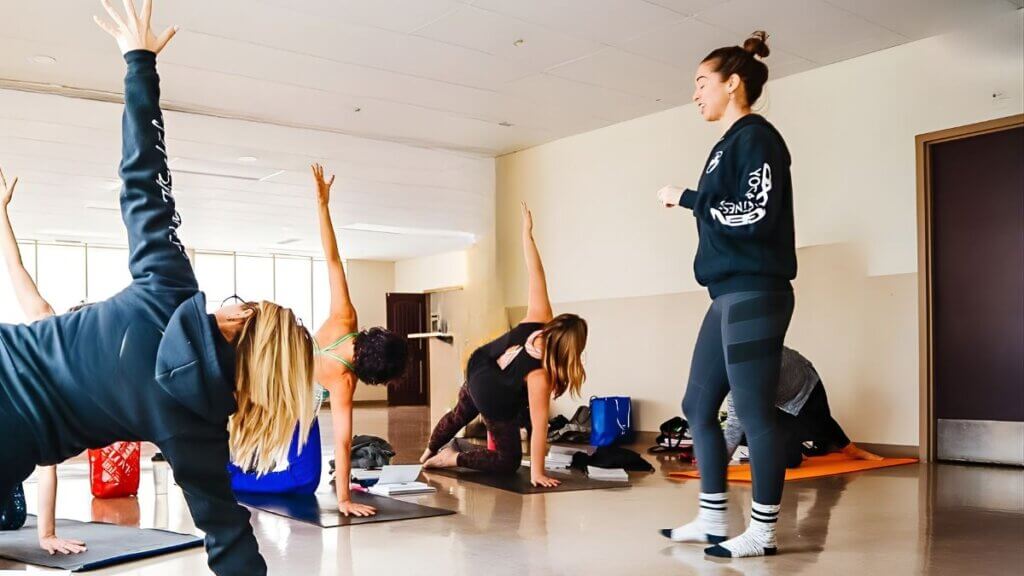
In our previous article, Scope of Practice — The Professional Container, we explored how to create a professional container for your yoga teaching in order to serve your students better.
Now we turn to what happens inside that container.
How do we support students and make them feel safe without overstepping boundaries or becoming a savior?
This is where the art of holding space becomes essential.
- By: Christina Raskin
- Published:
- Reviewed: March 26, 2026
Key Takeaways
- Holding space means creating safety without trying to fix or control student experiences.
- Clear boundaries and self-regulation allow teachers to support students without overstepping their role.
- Language, tone, and non-verbal cues shape the emotional environment of a class.
- Empowering students to trust their own experience is central to effective teaching.
- A strong container balances emotional awareness with structure and professionalism.
Introduction — A Common Teaching Question
Once that container is in place, a common question arises for many teachers:
How do we support students emotionally without becoming their therapist, counselor, or savior? What should a yoga teacher do when a student is having a strong emotional reaction?
This question shows up frequently in yoga teacher trainings. Yoga classes often bring up strong emotions, personal insights, and vulnerability. When that happens, teachers naturally want to help. But it’s not always clear how to respond in a way that is supportive without overstepping professional and personal boundaries.
This is where the concept of holding space becomes essential.
Why Holding Space Matters for Yoga Teachers
“Holding space” is a phrase often used in yoga communities, but it can feel vague or abstract.
In practice, it’s actually very practical.
Holding space means creating an environment where students feel safe to explore their experience without being judged, controlled, or “fixed.”
After training and evaluating yoga teachers for more than two decades, one thing consistently separates impactful teachers from the rest:
Their ability to hold space.
Most students have felt this difference. In some classes, you feel:
Seen
Accepted
Safe
Supported
In other classes, something feels off. The cues might be technically correct, but the environment doesn’t feel as supportive.
Holding space is often the invisible factor.
It’s also one of the most difficult teaching skills to explain in a teacher training. But once a teacher understands it and begins applying it, their teaching usually shifts powerfully. Students feel the difference immediately.
What Holding Space Actually Means
At its core, holding space involves three things.
Non-Judgmental Presence
Students are encouraged to have their own experience.
Your role is not to fix them or correct their emotional state. The student is not broken.
Instead, you observe, listen, and offer options that help them explore safely.
Emotional Safety
Yoga practice can bring up many different emotions: frustration, sadness, joy, vulnerability, and many more. None of these experiences are wrong.
Holding space means creating an environment where students feel safe to experience and explore whatever arises.
Empowerment
Rather than positioning yourself as the authority with all the answers, you guide students toward their own internal awareness.
Yoga ultimately teaches discernment and self-trust.
Our role is to support that process, not replace it.
What Holding Space Is Not
One misunderstanding many teachers have is believing that holding space means absorbing the emotional weight of the room.
Over the years I’ve seen teachers become overwhelmed because they feel responsible for everyone’s emotions and they are always trying to ‘fix’ everyone’s problems.
That is not the job.
You are not your students’ therapist, counselor, or emotional caretaker.
Holding space also does not mean abandoning structure or etiquette in class.
A safe container still needs boundaries.
For example, it’s common for students to experience emotional release during practice. Tears sometimes arise.
When that happens, students should feel safe to experience their emotions.
But as a teacher you must still maintain awareness of the entire room. The class cannot become centered around one student’s experience while others are ignored.
Holding space means offering steadiness and non-judgment inside a safe and structured environment.
Preparing Yourself to Hold Space
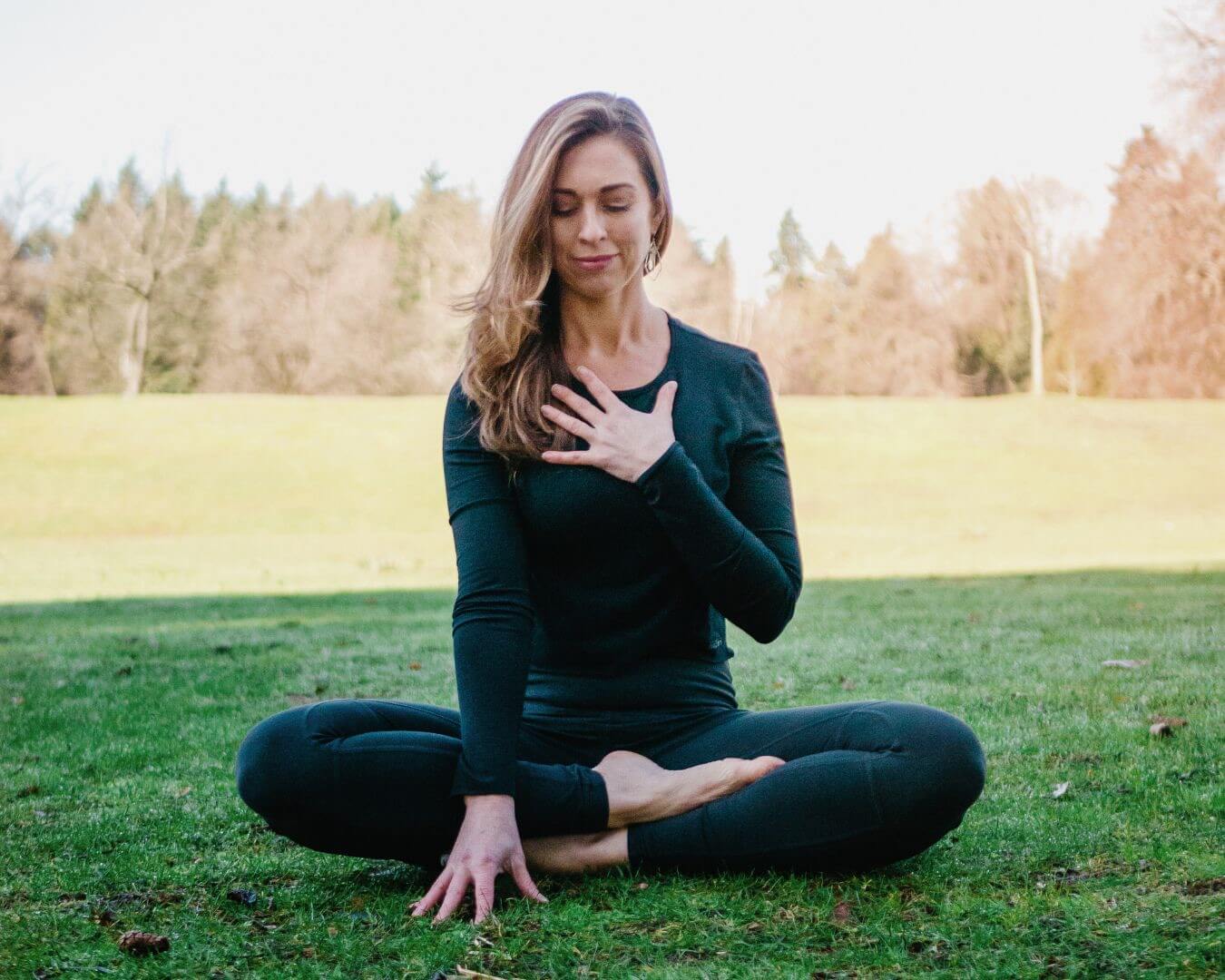
Before we can hold space for students, we need to regulate ourselves.
Students may not consciously recognize it, but they often feel the teacher’s nervous system. The tone of the room frequently reflects the teacher’s internal state.
This is one reason personal practice matters.
Yoga teachers need tools that help them arrive grounded before class begins.
Many teachers develop small rituals that help them shift into teaching mode.
For example, one practice I enjoy is spraying an essential oil blend while taking a few slow breaths, then setting a quiet intention before entering the studio or starting an online class.
This takes less than a minute, but it creates a clear transition.
A simple preparation process might include:
- Ground yourself
Three minutes of diaphragmatic breathing or chanting OM can help settle your nervous system. - Set an intention
Clarify the energy you want to bring into the room. - Establish boundaries
Some teachers visualize an energetic boundary around themselves to avoid becoming emotionally entangled with student experiences.
These small rituals help teachers stay centered when class dynamics become complex.
Creating a Physical Container
Psychological safety begins with physical safety.
The environment itself plays a role in whether students feel supported.
Some simple elements include:
- A clean, uncluttered practice space
- Comfortable temperature and ventilation
- Easy access to props
- Encouragement to use modifications
Props are especially important. Regularly encouraging blocks, straps, and blankets helps normalize adaptation and reminds students that practice can meet their individual bodies. After all, yoga isn’t a one size fits all.
Language Shapes the Container
The words we use strongly influence how safe students feel in class.
When I teach this in the 200hr Yoga Teacher Training program, it can sometimes feel trivial. However, words have power and carry energy. Small language choices can either empower students or make them feel judged.
Removing Hierarchical Language
Phrases like:
- “Level 2 pose”
- “Advanced version”
can unintentionally create a hierarchy where students feel they should be able to do something. By ranking their ability, you are ranking the student. To create an inclusive space, remember that all versions of the pose are valid.
Instead, describe the experience of the pose rather than ranking it.
Avoiding Minimizing Language
Teachers often say things like:
“If you can’t forward fold with straight legs, just bend your knees.”
The word “just” can unintentionally minimize effort and make students feel like they’re failing if something feels difficult.
Instead, offer the instruction neutrally or provide an option based on what they are experiencing in their body. For example, “if you feel this in the backs of the knees then bend your legs.”
Permission-Based Language
One of the most powerful tools for psychological safety is permission statements. Of course, the student does not need our ‘permission’ to do anything, they have autonomy over their own body and experience. However, students will naturally put teachers on a pedestal and there is a power imbalance so students often want to please their teachers. Permission-based language reminds them of their own autonomy.
Examples include:
- “Rest whenever you need.”
- “You’re welcome to take Child’s Pose at any time.”
- “Feel free to modify or skip this pose.”
Repeating these reminders throughout class reinforces that self-care is expected, not exceptional.
Encouraging Props
Instead of mentioning props once at the beginning of class, integrate them naturally into instruction.
Examples:
- “A block can support your hand here.”
- “You might try a strap to stabilize the shoulder.”
- “Feel free to place a blanket under your knees.”
When props are normalized, students feel less pressure to perform poses in a specific way.
Reinforcing Confidentiality
In workshops or discussions where students may share personal reflections, it can be helpful to remind the group, “What is shared here stays here.” Simple reminders build trust within the class environment.
Non-Verbal Communication Matters Too
Teachers communicate far more than words.
Students constantly read non-verbal cues such as:
- facial expressions
- posture
- eye contact
- tone of voice
- movement around the room
A warm expression, relaxed posture, and calm voice can signal safety.
On the other hand, behaviors like eye-rolling, frowning, or crossed arms can unintentionally communicate judgment or impatience.
This is a place where our personal practice comes in. As teachers, we need to self-reflect (svadhyaya) on our personal beliefs and habitual patterns. If, deep down, we judge people on their ability to do a pose then that belief will show our face, even if our words say something different. I often see this in teachers in regards to props and modifications. A teacher will say that students should use props or modify however, when a student doesn’t use props, even when they should, the teacher praises them publicly. This student becomes popular and a ‘prized’ student. This mis-alignment between our words and our actions creates an unsafe space.
Even small adjustments—like making gentle eye contact or nodding while a student speaks—can dramatically change how supported someone feels.
Supporting Students Without “Fixing” Them
Another challenge yoga teachers face is the savior complex.
Students often see teachers as experts or authority figures. Research suggests that when people receive advice from someone they perceive as an authority, their own internal decision-making can become quieter.
They defer.
This creates a responsibility for teachers to encourage autonomy rather than compliance.
Teachers frequently say:
“Listen to your body.”
But then follow with rigid instructions like:
“Your back foot must be parallel.”
For some bodies, that alignment cue creates discomfort and isn’t accurate for them.
If students override their internal signals to obey external instruction, they disconnect from their own intuition.
That’s the opposite of what yoga practice aims to cultivate.
Empowering Language in Practice
Instead of rigid commands, teachers can use language that invites exploration.
Examples include:
- “Maybe explore this option and notice how it feels.”
- “Only you know what feels stable in your body.”
- “If you feel discomfort in the knee, adjust the angle until it feels supportive.”
This approach reminds students that they are the experts in their own bodies.
Some helpful teaching strategies include:
- offering multiple options
- framing cues as invitations
- asking questions instead of correcting immediately
- describing sensations to avoid rather than aesthetic outcomes
- not telling them what they ‘should’ feel.
- modeling humility as a teacher
Our role is not to create obedience.
It is to cultivate discernment.
A Real Teaching Situation
Imagine a student begins crying quietly during a long hip-opening pose.
A teacher who feels responsible for fixing the situation might focus entirely on that student while largely ignoring the rest of the class.
But a teacher holding space would take a different approach.
They continue guiding the class calmly while briefly checking in with the student during and after practice. The teacher does not allow the student’s experience to derail their teaching or energy because the teacher understands their role is not to fix the student.
The student feels supported, but the class container remains intact.
This balance—acknowledging the experience without becoming consumed by it—is the essence of holding space.
Self-Regulation Is a Teaching Skill
Students bring many unseen experiences into the room.
Triggers can arise from things like:
- tone of voice
- physical proximity
- hands-on adjustments
- authoritarian language
Because of this, self-regulation becomes a professional skill for yoga teachers.
If a teacher becomes reactive, defensive, or emotionally entangled, the container weakens.
Grounded authority is calm, clear, and steady.
This is emotional maturity in action.
Shared Responsibility in the Yoga Room
Empowerment in yoga teaching involves both teacher and student responsibility.
Students learn to advocate for their needs.
Teachers create conditions that make that advocacy safe.
We support this by:
- referring students to appropriate professionals when needed
- avoiding diagnosis or therapy roles
- offering options rather than commands
- regulating our own nervous systems
- maintaining ethical boundaries
Holding space is not about having all the answers.
It’s about creating the conditions where students can discover their own.
Teaching Takeaways
- Holding space is support without fixing
- Language shapes safety
- Regulation is required
- Non-verbal cues matter
- Teaching builds awareness, not compliance
Looking Ahead: Influence Beyond the Mat
In the final article, we explore the teacher’s influence beyond class.
Because what we embody teaches more than what we say.
Refine Your Ability to Hold Space
If you’re ready to deepen your teaching skills and learn how to create safe, effective, and professional class environments, explore our 300-Hour Advanced Yoga Teacher Training, where concepts like holding space, scope of practice, and advanced teaching methodology are developed in depth.

Christina Raskin
You Love Yoga, We Love Yoga—Let’s Stay Connected
Get yoga tips, a little inspiration, and friendly emails—because yoga is better with friends.
🔒 No spam. No selling your data. Ever.