Home » Yoga Blog » Yoga Poses » Happy Baby Yin Yoga Pose: A Gentle Hip Release Guide
Happy Baby Yin Yoga Pose: A Gentle Hip Release Guide
Happy Baby Pose, or Ananda Balasana in Sanskrit, is a simple reclined Yin Yoga pose that opens the hips, inner thighs, and lower back without asking much from the body. With the right support, it can be a steady, calming pose for students who want hip release without forcing flexibility.
- By: Kevin Parenteau
- Published:
- Reviewed: June 18, 2026
Happy Baby Pose (Ananda Balasana): Overview
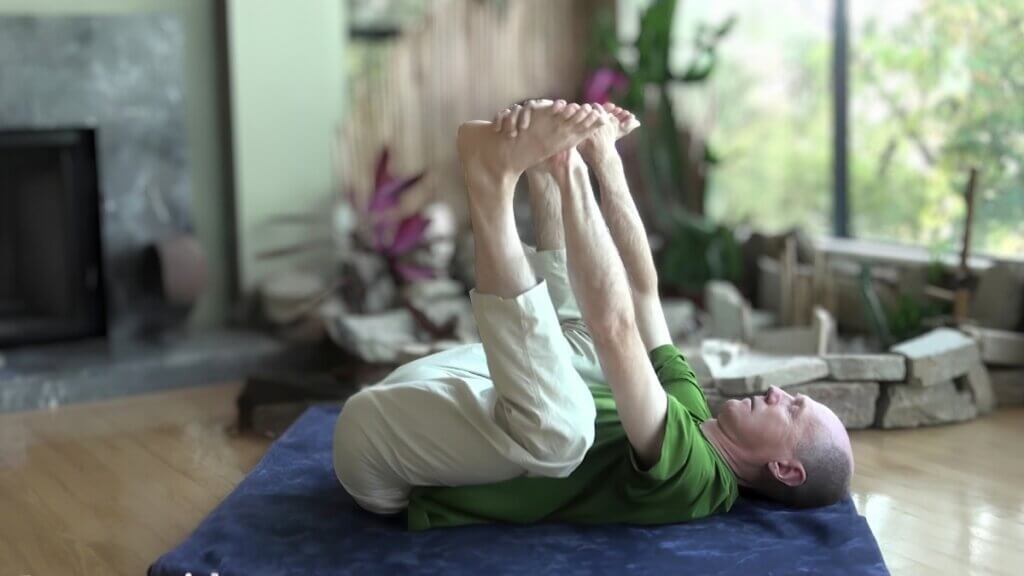
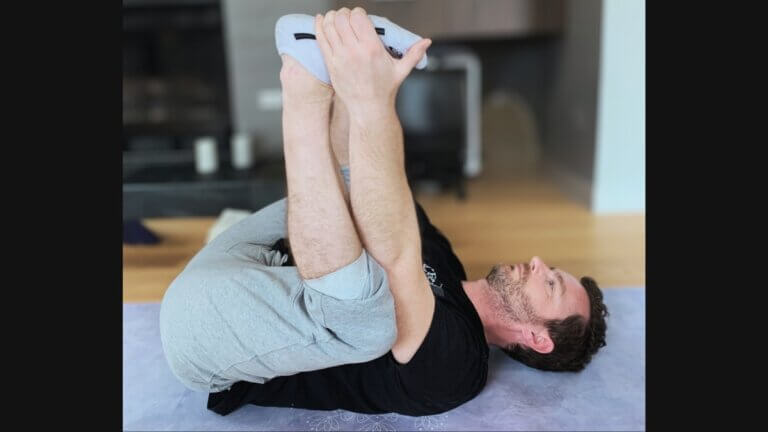
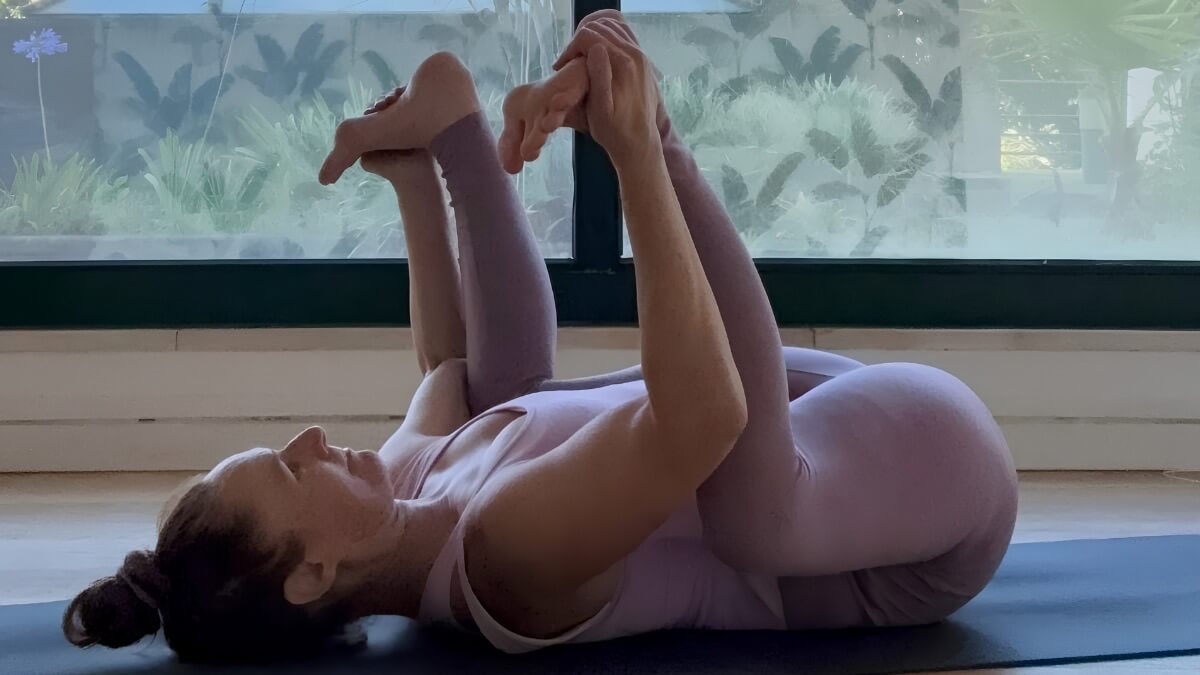
Happy Baby is a reclined hip-opening pose where you lie on your back, bend your knees, and hold your feet, ankles, or legs while letting your knees soften toward the floor.
In Yin Yoga, this pose is usually practiced with stillness rather than movement. You find a version of the shape that feels steady, stay for several minutes, and let gravity do most of the work.
Happy Baby is also known by its Sanskrit name, Ananda Balasana, often translated as “blissful baby pose.” Some teachers also refer to it as Dead Bug Pose, though that name is less common in Yin Yoga.
The pose mainly targets the hips, inner thighs, groin, and lower back. It can fit well in the middle or near the end of a Yin sequence, especially after poses like Butterfly, Dragon, or Sleeping Swan.
How to Do Happy Baby Pose in Yin Yoga
- Lie on your back with your knees bent and your feet on the floor. Let your spine settle into the mat.
- Draw your knees toward your chest, then open them slightly wider than your torso.
- Reach for the outer or inner edges of your feet. If that does not feel accessible, hold your ankles, big toes, calves, or the backs of your thighs.
- Flex your feet so the soles face upward. Let your knees soften toward the floor beside your ribs.
- Keep your tailbone heavy. If your lower back lifts sharply away from the floor, ease out slightly.
- Hold for 3 to 5 minutes, or start with 1 to 2 minutes if you are newer to Yin Yoga.
- To come out, release your feet, hug your knees into your chest, and pause for a few breaths before moving on.
In Yin Yoga, the goal is not to force the deepest version of the pose. Choose a version where you can breathe naturally, remain reasonably still, and feel sensation without strain.
Happy Baby Pose Video Tutorial
Benefits of Happy Baby Pose
Happy Baby is a simple pose, but it can be very useful in a Yin Yoga practice because it combines hip opening, spinal support, and a grounded reclined position.
Physical Benefits
- Opens the hips and groin: The wide-knee position creates a stretch through the inner thighs, groin, and hip rotators.
- Releases the lower back: Because the pose is done lying down, it can help soften tension around the lumbar spine without requiring the body to balance or bear weight.
- Stretches the inner thighs: Happy Baby gently lengthens the adductors, a group of muscles that often become tight from sitting, walking, cycling, or daily movement patterns.
- Supports pelvic mobility: The pose creates gentle movement and space around the hips, pelvis, and sacrum, especially when practiced with patience and support.
- Encourages relaxation: The reclined position can make the pose feel calming, especially when paired with slow breathing and a supported setup.
Energetic Aspects: Chakras & Meridians
In Yin Yoga, Happy Baby is often associated with the Kidney and Urinary Bladder meridians because of the stretch through the inner legs and the release along the spine and back body.
Energetically, this pose may feel grounding and quieting. Because it works around the pelvis and lower body, it is also commonly connected with the Root Chakra and Sacral Chakra, which are associated with grounding, stability, creativity, and emotional ease.
As always, energetic effects are personal. Some students feel a strong release in this pose, while others experience it as a practical hip opener.
Contraindications & Safety
Happy Baby is generally accessible, but it still needs to be practiced with care.
Modify or avoid this pose if you have:
- Knee sensitivity or injury: Avoid pulling aggressively on the feet. Hold behind your thighs instead, or practice one leg at a time.
- Hip injury or hip replacement: Use a smaller range of motion and check with your healthcare provider if you are unsure whether this position is appropriate for you.
- During the second or third trimester of pregnancy, lying flat on the back may not be suitable for everyone. A side-lying variation or another supported hip opener may be a better choice.
- Neck discomfort: If your chin lifts or your head feels strained, place a folded blanket under your head.
- Recent abdominal surgery: Wait until you are cleared to resume this type of movement, and avoid any position that causes pressure or discomfort.
A good rule for this pose: you should feel a steady stretch, not sharp pain, numbness, tingling, or joint strain. If your tailbone lifts dramatically or your breath becomes tense, back off and use more support.
Pose Modifications & Variations
Happy Baby Pose can be easily adjusted with props, making it useful for many different bodies and experience levels.
Supported Happy Baby Pose
Place a folded blanket under your head or a thin blanket under your sacrum if the floor feels too hard.
You can also keep the knees less wide and hold behind the thighs to make the pose less intense. This approach is often the best version for beginners or anyone with tight hips.
Happy Baby Pose with Props
A Yoga strap can make Happy Baby much more comfortable. Loop a strap around each foot and hold the ends of the strap instead of reaching for your feet directly.
Looping the strap around your feet helps if your shoulders, hips, or hamstrings feel tight. It also helps keep your upper body more relaxed.
You can also place a folded blanket under your head if your neck feels strained, or use a thin blanket under your pelvis if your sacrum feels uncomfortable on the floor.
Read 8 Yoga Props That Support Your Yin Practice to learn more.
Beginner-Friendly Variation
Practice one side at a time. Keep one foot on the floor or extend the opposite leg long on the mat while holding one foot, ankle, calf, or thigh.
The one-sided version can be easier on the hips and lower back, and it gives you a chance to notice differences between sides.
You can also hold behind your thighs instead of reaching for your feet. Holding thighs reduces strain through the knees and shoulders while still giving you the basic shape of the pose.
Deeper Variation
If your hips feel open and your body is comfortable, you can gently draw the knees closer toward the floor.
Keep your tailbone grounded and avoid pulling so strongly that your lower back rounds aggressively or your breath becomes tense.
For Yin Yoga, deeper is not automatically better. The best version is the one you can hold with steady breath and minimal strain.
Muscles, Joints & Target Areas
Happy Baby primarily targets the hips, pelvis, inner thighs, and lower back.
Primary target areas:
- Inner thighs
- Groin
- Hip rotators
- Lower back
- Sacrum and pelvis
Common anatomical focus:
- Adductors
- Gluteal muscles
- Piriformis and deep hip rotators
- Lumbar spine
- Sacroiliac area
- Hip joint capsule
In Yin Yoga, the longer hold gives the body time to settle into the pose gradually. Rather than actively stretching the muscles, the emphasis is on relaxing around the shape and allowing the deeper tissues around the hips and pelvis to respond slowly.
Beginner Tips & Props
Keep the pose simple. You do not need to force your knees toward the floor.
- Use a strap if reaching your feet makes your shoulders tense.
- Keep your tailbone heavy. If your pelvis rolls far off the mat, reduce the pull.
- Let your face, jaw, and shoulders soften.
- Breathe naturally. You should not have to brace or hold your breath.
- Come out slowly. After several minutes, the hips and lower back may feel vulnerable.
Happy Baby should feel steady and spacious. If it feels sharp, pinchy, or nervy, change the angle or choose a gentler variation.
How Long Should You Hold Happy Baby Pose?
In a Yin Yoga practice, Happy Baby is commonly held for 3 to 5 minutes.
Beginners can start with 1 to 2 minutes, especially if the hips, knees, or lower back feel sensitive.
More experienced students may stay longer, but only if the pose continues to feel safe and sustainable. Longer holds are unnecessary if the body is already providing clear feedback.
Use a timer so you can relax into the pose without watching the clock.
When to Practice Happy Baby Pose
Happy Baby Pose works well in several places in a Yin Yoga sequence.
- In the middle of practice, after poses like Butterfly, Dragon, or Sleeping Swan, continue working on the hips.
- Near the end of practice, when you want something grounding before Savasana.
- On its own, when your hips or lower back feel tight, and you want a simple reclined pose.
It also pairs well with Supine Twist, Reclined Butterfly, Constructive Rest, or Legs Up the Wall.
Counterposes for Happy Baby Pose
After Happy Baby Pose, give your body a neutral pause before moving into the next shape.
Good counterposes include:
- Knees to Chest: Hug your knees in and gently let the lower back settle.
- Constructive Rest: Place your feet on the floor, knees bent, and let the knees fall toward each other.
- Supine Twist: Gently drop the knees to one side to release the spine.
- Savasana: Extend your legs and rest quietly for a few breaths.
Stay in your counterpose for 1 to 3 minutes before continuing.
Related Yin Yoga Poses
If you enjoy Happy Baby Pose, these related poses may also be useful:
- Butterfly Pose: Another accessible hip opener that works the inner thighs and groin.
- Sleeping Swan: A deeper hip-opening pose that targets the outer hips and glutes.
- Dragon Pose: A low lunge variation that opens the hip flexors and groin.
- Reclined Butterfly: A supported reclined hip opener that can feel more restorative.
- Saddle Pose: A deeper front-body stretch that works the thighs and hip flexors.
These poses can be linked together for a simple hip-focused Yin Yoga sequence.
Happy Baby Pose FAQ
What is Happy Baby Pose in Yin Yoga?
Happy Baby Pose, or Ananda Balasana, is a reclined hip opener where you lie on your back, bend your knees, and hold your feet, ankles, or legs. In Yin Yoga, the pose is held quietly for several minutes to target the hips, groin, inner thighs, and lower back.
What are the benefits of Happy Baby Pose?
Happy Baby Pose can help open the hips, stretch the inner thighs, soften the lower back, and support relaxation. In Yin Yoga, it is also commonly associated with the Kidney and Urinary Bladder meridians because of the areas of the body being stretched and released.
How long should you hold Happy Baby Pose?
Most students can hold the Happy Baby Pose for 3 to 5 minutes in a Yin Yoga practice. Beginners may prefer 1 to 2 minutes at first. Come out earlier if you feel sharp pain, numbness, tingling, or strain in the knees, hips, or lower back.
Is Happy Baby Pose safe for beginners?
Yes, the Happy Baby Pose can be beginner-friendly when modified appropriately. Use a strap, hold behind the thighs, or practice one leg at a time if reaching the feet creates strain. The pose should feel steady and supported, not forced.
What should I do if Happy Baby Pose feels uncomfortable?
First, reduce the intensity. Hold behind your thighs instead of your feet, bring your knees closer together, use a strap, or practice one leg at a time. If discomfort becomes sharp, pinchy, or nervy, come out of the pose and choose a gentler alternative.
Happy Baby Pose is a simple shape that can offer a lot when practiced with patience. Instead of trying to pull yourself into the deepest version, let the pose be quiet, supported, and sustainable. With time, it can become a useful way to release the hips, soften the lower back, and settle into stillness.
Practice Yin Yoga with us
Join Bernie Clark and Diana Batts for their weekly live online Yin Yoga Classes, or practice with their recordings. Available in the Welcome to the Yinside Subscription.

Kevin Parenteau
You Love Yoga, We Love Yoga—Let’s Stay Connected
Get yoga tips, a little inspiration, and friendly emails—because yoga is better with friends.
🔒 No spam. No selling your data. Ever.