Home » Yoga Blog » Yoga Poses » 8 Yoga Props That Support Your Yin Practice
8 Yoga Props That Support Your Yin Practice
Yoga props can look like optional extras, especially if you’re used to more active styles of Yoga. In Yin Yoga, though, props are often what make the practice work.
A bolster, blanket, block, or strap can take just enough pressure out of a pose so your body stops fighting the shape. That matters in Yin because you’re usually staying for a while. If your knees, hips, back, or shoulders are bracing the whole time, you may be technically “in the pose,” but you’re not really settling into it.
I’ve seen this happen a lot. Someone thinks they need to push deeper, when what they actually need is a folded blanket under the knee, a block under the hip, or a bolster under the chest. Suddenly, the pose becomes quieter. Not easier in the lazy sense — just more useful.
The right prop helps you find the version of the pose your body can actually stay with.
Below are eight props that can make Yin Yoga more comfortable, more sustainable, and a lot less like a wrestling match with the floor.
- By: Kevin Parenteau
- Published:
- Reviewed: May 28, 2026
Best Yin Yoga Props for Beginners
If you’re starting, you don’t need everything on this list.
| Prop | Best For | Priority |
|---|---|---|
| Bolster | Supported forward folds, reclined poses, Child’s Pose | Start here |
| Yoga blocks | Hips, hands, forehead, backbend support | Essential |
| Blankets | Knees, ankles, neck, pelvis | Essential |
| Strap | Hamstrings, shoulders, and reclined leg stretches | Very useful |
| Sandbag | Grounding and gentle weight | Optional |
| Eye pillow | Savasana and quieting the senses | Optional |
| Chip foam block | Softer support for bony areas | Optional |
| Zafu | Seated poses and tight hips | Optional |
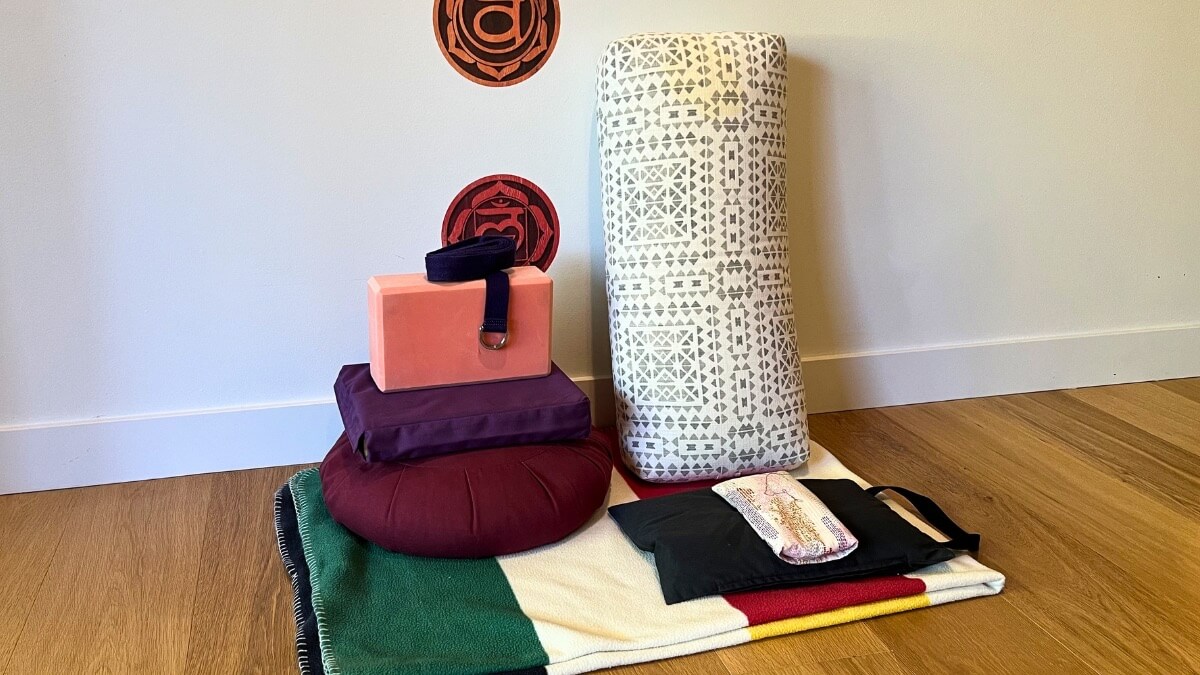
A simple home setup could be:
- 1 bolster
- 2 Yoga blocks
- 1–2 firm blankets
- 1 Yoga strap
That gives you enough support for the most common Yin Yoga poses, including Butterfly, Child’s Pose, Caterpillar, Sphinx, supported twists, and reclined hip openers.
The other props — sandbags, eye pillows, chip foam blocks, and meditation cushions — are useful additions, but they’re not required on day one.
Foundational Support Props
These are the weight-bearing workhorses that let you relax into long holds without your muscles compensating.
1. Bolster
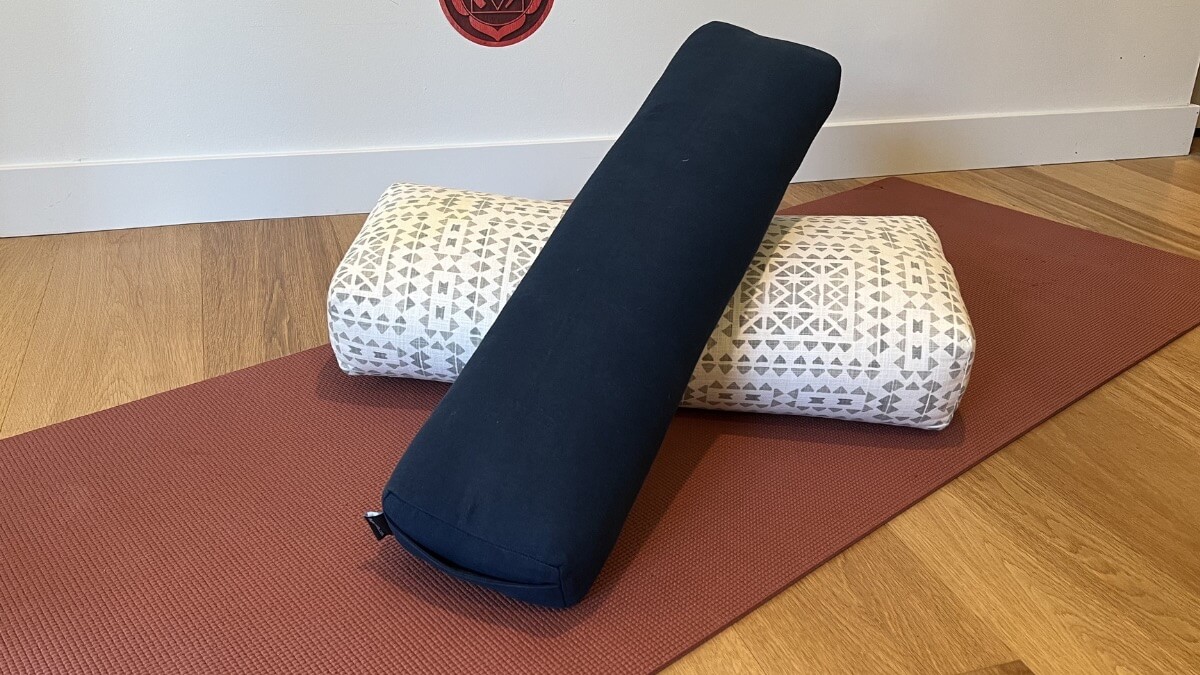
A bolster is probably the first prop I’d recommend for a Yin Yoga practice.
It gives your body something to lean into. That sounds simple, but it changes a lot. In a long-held pose, even a small amount of unsupported effort can build up. Your shoulders grip, your lower back works, or your hips start to guard against the shape.
A bolster helps reduce that.
You can use it lengthwise under the torso in Supported Child’s Pose, under the spine in Reclined Butterfly, or across the back for a gentle supported chest opener. It can also be placed under the knees in Savasana or under the chest in a forward fold when the floor feels too far away.
Best uses in Yin Yoga:
- Supported Child’s Pose — Place it lengthwise under your torso so your body has somewhere to rest.
- Reclined Butterfly — Use it along the spine for a supported chest opener.
- Caterpillar Pose — Rest your chest or forehead on the bolster if folding forward causes excessive strain.
- Supported Fish Pose — Place it across the mid-back for a gentle opening of the upper back.
What to look for:
For Yin, I usually prefer a firm rectangular bolster. It gives you a flat, stable surface and is less likely to roll or collapse under your body weight.
A couch pillow can work in a pinch, especially when you’re experimenting at home, but a proper Yoga bolster is more reliable for longer holds.
2. Yoga Blocks
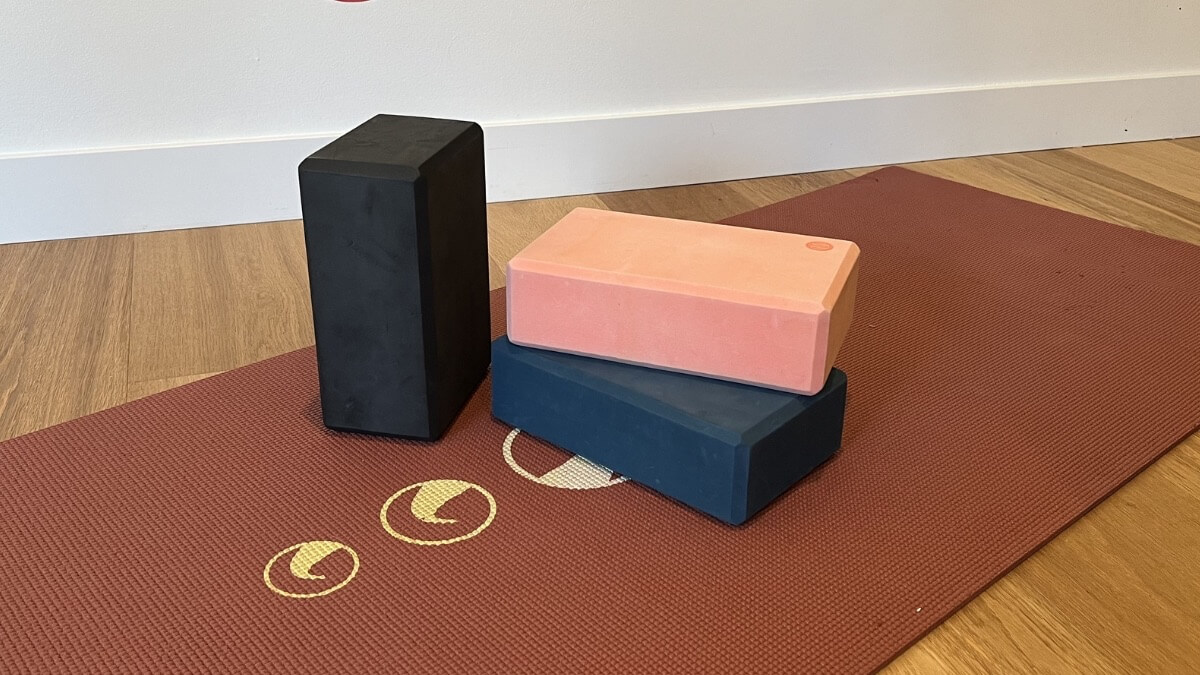
Yoga blocks are useful because they help the ground come to you.
That might mean placing a block under your hand in a twist, under your hip in Sleeping Swan, or under your forehead in a forward fold. The point is not to “cheat” the pose. The point is to reduce unnecessary strain so you can stay with the pose without gripping.
In Yin Yoga, blocks are especially helpful because they give you options. Most blocks have three heights, so you can make small adjustments without completely changing the pose.
Best uses in Yin Yoga:
- Supported Squat — Place a block under the heels or seat if the ankles or hips need support.
- Sphinx Pose — Use blocks under the forearms to adjust the angle of the backbend.
- Sleeping Swan — Place a block under the front hip if the pelvis is hovering or the knee feels vulnerable.
- Banana Pose — Use a block or folded blanket under the head so the neck can relax.
Foam or cork?
Foam blocks are softer and more comfortable under the head, knees, or sacrum. Cork blocks are firmer and more stable when you need more structure.
If you’re buying your first pair, foam is usually the friendlier choice for Yin. If you already know you like firm support, cork can be useful too.
3. Chip Foam Block
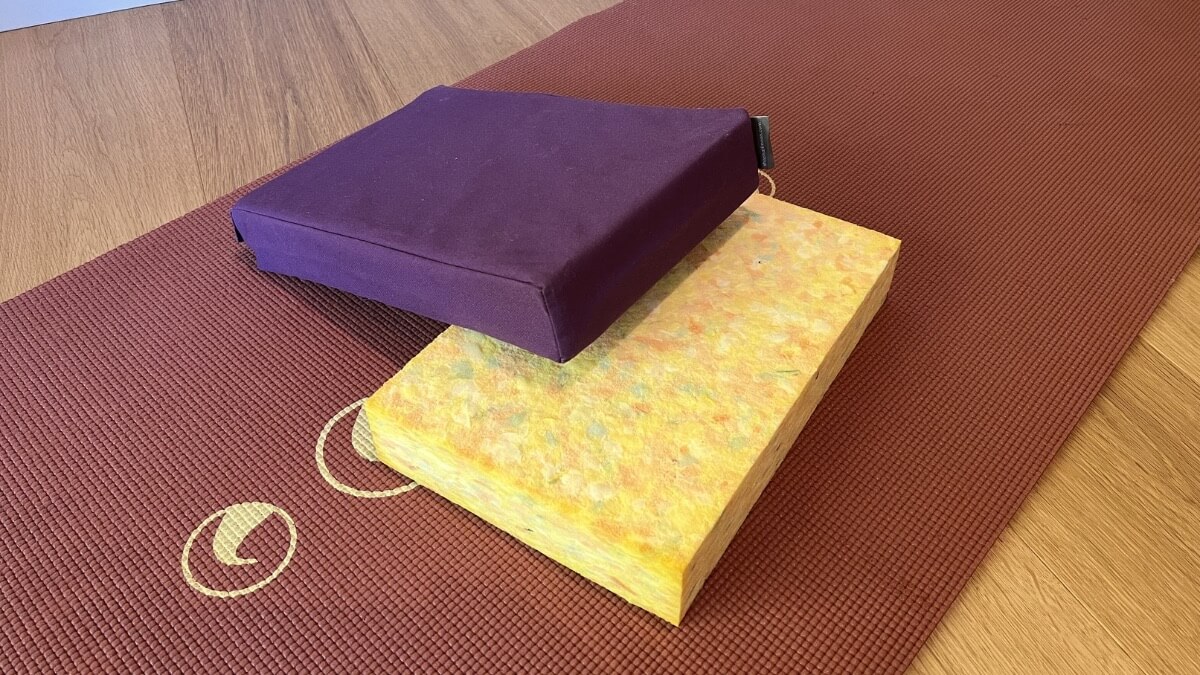
A chip foam block is one of those props that doesn’t seem necessary until you use it in the right place.
It is softer than cork and usually more forgiving than a standard foam block. That makes it useful under bony areas like the sacrum, ribs, upper back, or back of the head.
In long Yin Yoga holds, comfort matters. Not because the practice needs to feel cozy all the time, but because sharp pressure points can become the main thing you notice. Once that happens, your body tends to brace.
A chip foam block gives support without feeling quite as hard or angular.
Best uses in Yin Yoga:
- Supported Bridge — Place it under the sacrum for a mild supported backbend.
- Reclined Twist — Use it under the shoulder or ribcage if one side is lifting away from the floor.
- Legs Up the Wall variation — Place it under the hips for gentle elevation.
- Supported Savasana — Use it under the knees or head when you want a little lift without a hard edge.
The chip foam block isn’t the first prop I’d buy, but it’s a nice upgrade if you practice yin yoga often.
4. Blankets
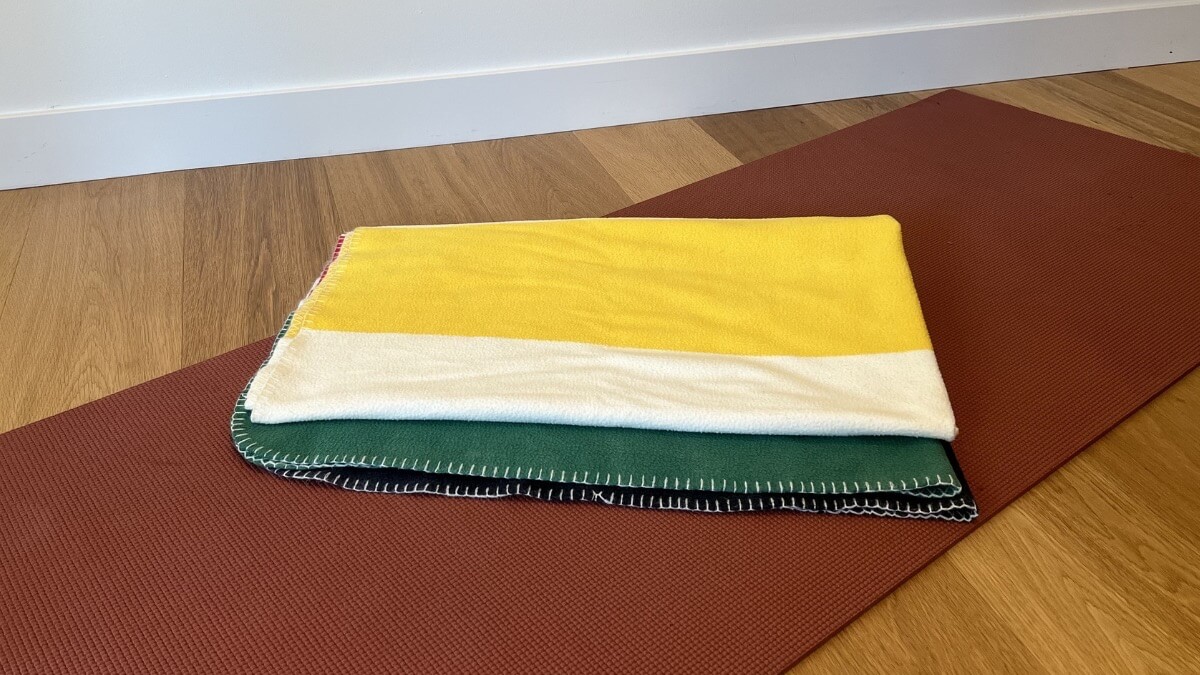
Blankets are the quiet heroes of a Yin Yoga setup.
They do not look as impressive as bolsters or sandbags. Still, they solve many small problems: pressure under the knees, ankles digging into the floor, the head hanging in a forward fold, or the pelvis tipping awkwardly in seated poses.
Sometimes the difference between “I hate this pose” and “Okay, I can stay here” is one folded blanket.
Best uses in Yin Yoga:
- Under the knees — Helpful in Child’s Pose, Supported Bridge, and reclined poses.
- Under the ankles — Useful in prone poses like Sphinx or Seal.
- Under the hips — Helps the pelvis tilt forward in seated forward folds.
- Behind the neck — Supports the natural curve of the neck in long supine holds.
What to look for:
Firm Yoga blankets are better than fluffy household blankets because they fold cleanly and hold their shape. Mexican-style Yoga blankets work well, but any firm blanket can do the job.
For home practice, two blankets are enough to start. Three is better if you like a lot of support.
Deepening and Refining Props
Once your foundation is stable, these props let you explore range, longer holds, and more specific targets.
5. Yin Yoga Sandbag
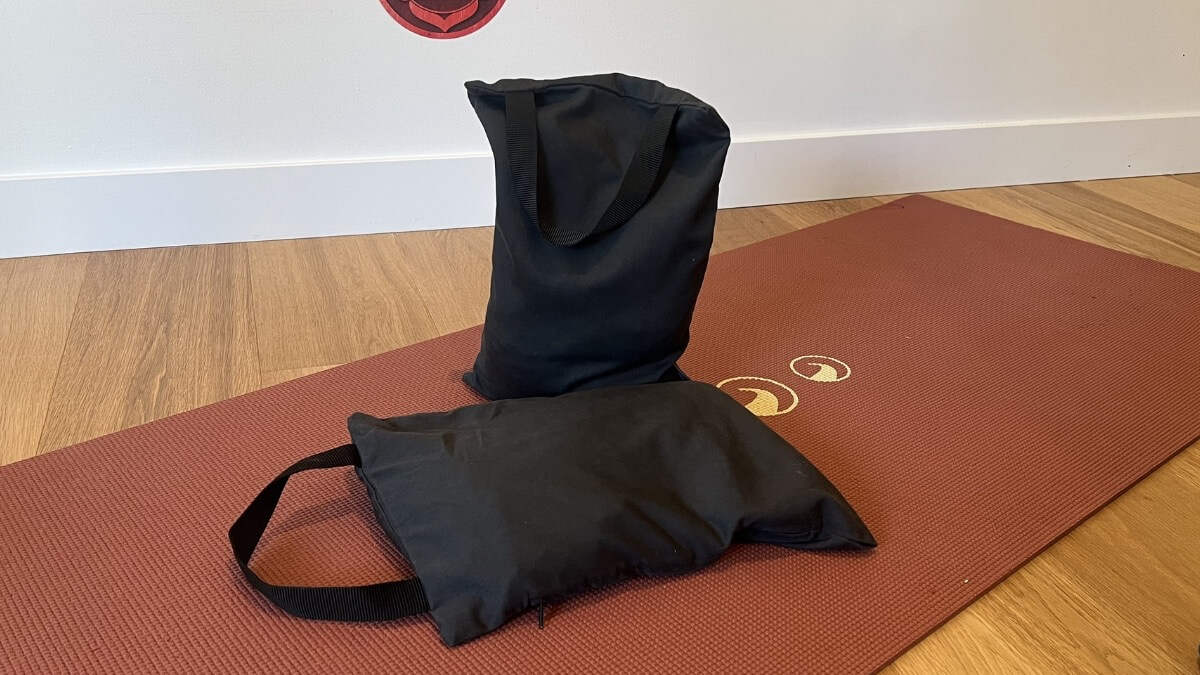
A sandbag adds gentle weight.
That weight can feel grounding, especially in poses where the body keeps subtly holding on. A sandbag across the thighs in Butterfly Pose, across the pelvis in Savasana, or over the lower back in Child’s Pose can help create a sense of heaviness and support.
The keyword is gentle.
A sandbag should not force your body deeper into a pose. It should feel like steady encouragement, not pressure. If your body starts bracing against the weight, the sandbag is too heavy or in the wrong place.
Best uses in Yin Yoga:
- Reclined Butterfly — Place it across the thighs for a grounded hip opener.
- Child’s Pose — Rest it across the low back or pelvis.
- Savasana — Place it on the belly, pelvis, or thighs.
- Supine Twist — Use it carefully over the top thigh if it feels supportive.
What to look for:
Choose a Yoga sandbag with a removable, washable cover. The weight should feel steady but not overwhelming. For many people, something in the 5–10 lb range is plenty.
A sandbag is optional, but it can be lovely if you enjoy a more grounded Yin Yoga practice.
6. Yoga Strap
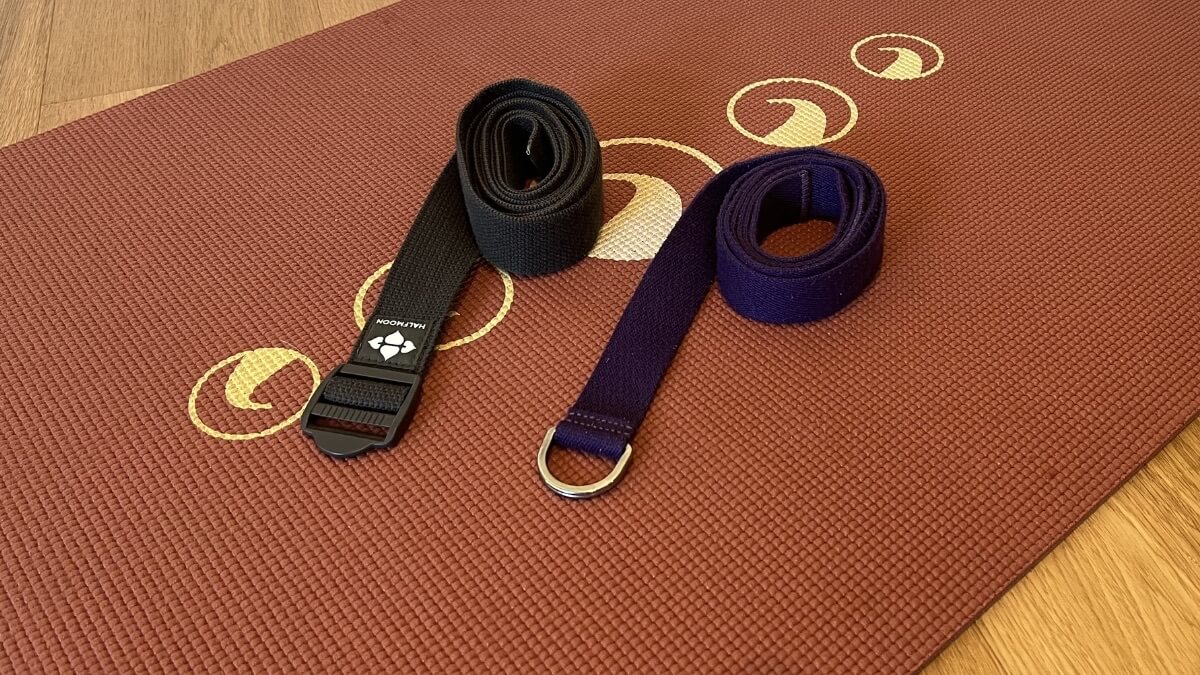
A Yoga strap helps you hold a shape without overworking your arms, shoulders, or back.
That is useful in Yin Yoga because you are not trying to pull yourself into the deepest possible stretch. You are trying to find a position you can stay in without strain.
A strap can make hamstring stretches, hip openers, and shoulder positions much more manageable. It can also help you maintain a shape while using less effort.
Best uses in Yin Yoga:
- Reclined Hand-to-Big-Toe Pose — Loop the strap around the foot so your leg can be supported without gripping.
- Seated Forward Fold — Use the strap around the feet if reaching forward causes the spine to round or the shoulders to tense.
- Shoulder stretches — Hold the strap behind the back to create space without forcing the arms.
- Bound Butterfly variation — Use the strap around the low back and feet to support a forward fold.
What to look for:
An 8-foot strap with a D-ring or buckle is usually enough for most people. Cotton is comfortable to hold and works well for slower practices.
Set up the strap before you settle into the pose. Adjusting it mid-hold is sometimes necessary, but it usually pulls you out of the quieter part of the practice.
7. Eye Pillow
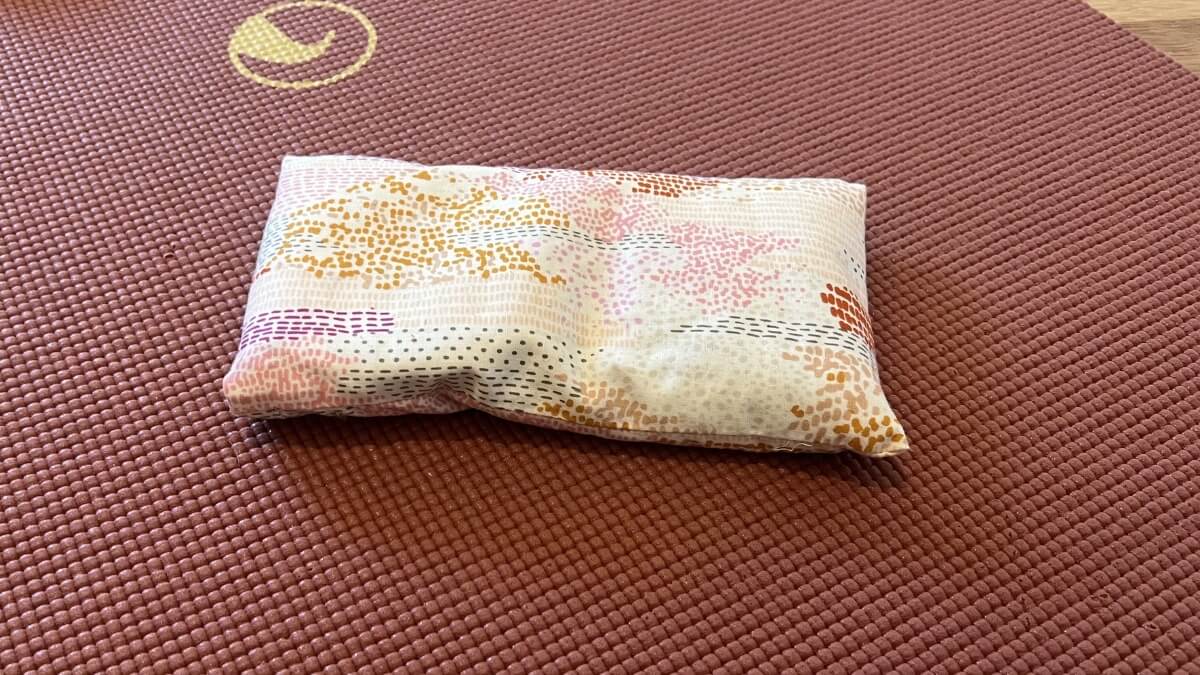
An eye pillow is not essential, but it can change the feeling of a Yin Yoga practice.
Covering the eyes reduces visual stimulation, which can make it easier to settle. The gentle weight over the forehead and eyes can also be calming, especially in Savasana or supported reclined poses.
The eye pillow is less about “fixing” anything and more about creating a quieter environment for practice.
Best uses in Yin Yoga:
- Savasana — Especially when practicing in a bright room.
- Reclined Butterfly — Helpful when the body is fully supported, and you want to soften the face.
- Supported Fish Pose — Useful if the eyes or forehead feel tense.
- Legs Up the Wall — Adds a grounding, inward quality to the pose.
What to look for:
Choose one that feels light and comfortable. Flaxseed or lavender-filled eye pillows are common, but scent is personal. If strong smells bother you, go unscented.
8. Meditation Cushion (Zafu)
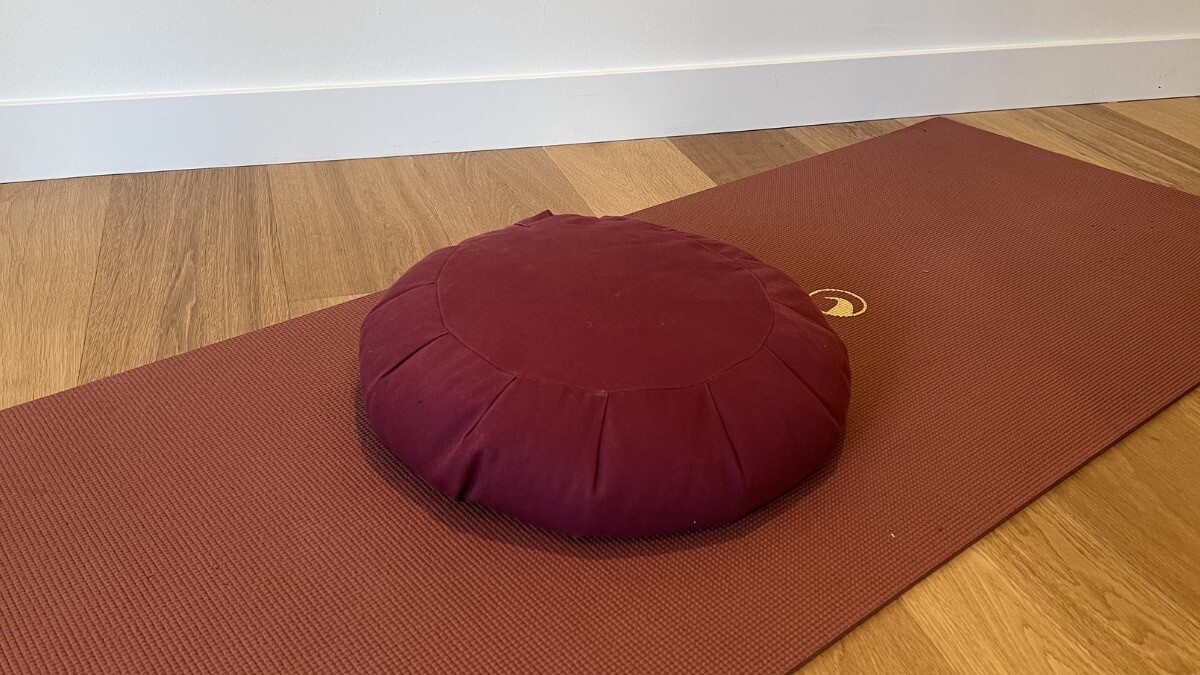
A meditation cushion can be very helpful in seated Yin Yoga poses, especially if your hips, hamstrings, or low back feel restricted.
Sitting flat on the floor does not work well for everyone. If the pelvis tips backward, the spine rounds, and the body starts working hard to stay upright. Lifting the hips can make seated poses feel much more accessible.
A zafu, folded blanket, or firm cushion can all do the job.
Best uses in Yin Yoga:
- Shoelace Pose — Sit on a cushion to reduce strain in the knees and hips.
- Caterpillar Pose — Elevate the hips to make folding forward easier.
- Dragonfly Pose — Use height under the pelvis so the spine can soften without collapsing.
- Child’s Pose — Place the cushion between the heels and hips if the knees need more space.
What to look for:
A buckwheat-filled zafu gives firm, moldable support. Crescent-shaped cushions can also work well because they create room for the thighs.
This room for the thighs is especially useful if seated Yin Yoga poses always feel like a battle with your hamstrings.
Final Thoughts on Yin Yoga Props
You do not need a studio full of props to practice Yin Yoga well.
Start with the basics: a bolster, two blocks, a strap, and a couple of firm blankets. That setup will cover most poses and give you plenty of options for supporting your body.
From there, you can add props based on what you actually need. If your hips feel unsupported, try a zafu. If pressure points distract you, try a chip foam block. If you love the feeling of grounding, add a sandbag. If your mind stays busy during Savasana, an eye pillow might help.
Props are not there to make the practice look fancy. They are there to help you stay long enough to listen.
Practice Yin Yoga with Bernie Clark and Diana Batts
Join Bernie Clark and Diana Batts for their weekly live online Yin Yoga Classes, or practice with their recordings. Available in the Welcome to the Yinside Subscription.

Kevin Parenteau
You Love Yoga, We Love Yoga—Let’s Stay Connected
Get yoga tips, a little inspiration, and friendly emails—because yoga is better with friends.
🔒 No spam. No selling your data. Ever.