Home » Yoga Blog » Yoga Poses » Dragonfly Yin Yoga Pose: The Complete Guide
Dragonfly Yin Yoga Pose: The Complete Guide
Ever notice how tight your inner thighs feel after sitting all day?
That deep ache in your hip creases and groin isn’t just stiffness. It’s your body holding onto stress, old movement patterns, and hours of compression from chairs and cars. Most stretches barely reach these areas because they require a completely different release angle.
Dragonfly Pose (aka Straddle Pose) gets there. This wide-legged seated forward fold targets the inner thighs, hip adductors, and lower back in a way standing stretches can’t match. It’s one of the most powerful hip openers in Yin Yoga because it works with gravity and time instead of force.
Here’s how to practice it safely, modify it for your body, and unlock the deep release your hips have been craving.
- By: Kevin Parenteau
- Published:
- Reviewed: June 3, 2026
What Is Dragonfly Pose in Yin Yoga
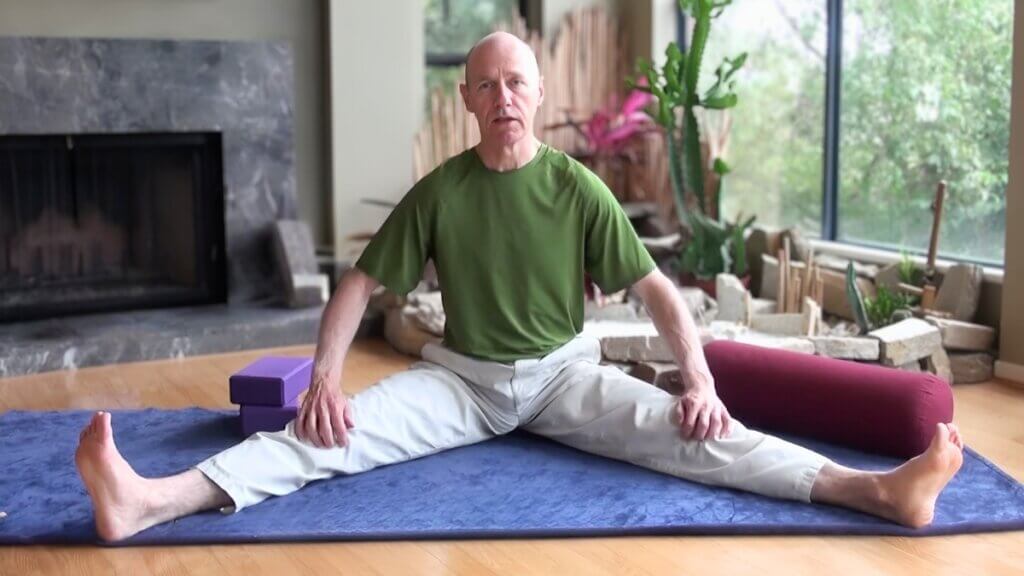
Dragonfly Pose is a passive, seated wide-legged forward fold that uses gravity and long holds to release tension in the inner thighs, groin, and lower spine. You’ll also hear it called Straddle Pose, Upavistha Konasana (in Sanskrit), or Wide-Angle Seated Forward Bend in other styles of yoga.
In Yin Yoga, the goal isn’t to stretch as far as possible. It’s about finding a sustainable edge where you feel sensation without pain, then holding that position for several minutes while your connective tissues slowly release.
Dragonfly pose targets primarily:
- Hip adductors (inner thigh muscles)
- Hamstrings
- Lower back and spine
- Kidney and Liver meridians
- Urinary Bladder meridian along the back body
Because of the wide-leg position and forward fold, Dragonfly creates compression in the hip joints and a deep stretch in the inner legs. It’s especially useful for people who sit a lot or feel chronically tight in the hips and groin.
How to Practice Dragonfly Pose Step by Step
This isn’t about touching your chest to the floor. It’s about finding the right amount of sensation for your body and staying in Dragonfly (straddle pose) long enough for the magic to happen.
- Start seated on your mat. Spread your legs wide into a straddle position, knees pointing up toward the ceiling. Flex your feet gently or let them relax naturally, whichever feels better.
- Sit tall first. Stack your spine and take a breath. If your pelvis tilts backward and your lower back rounds, sit on a folded blanket or bolster to elevate your hips. This makes the forward fold accessible and safe.
- Begin folding forward. Walk your hands forward on the floor between your legs. Move slowly. Let gravity pull you down instead of forcing your torso toward the ground.
- Find your edge. Stop when you feel a moderate stretch in your inner thighs, hamstrings, or lower back. You should feel sensation but not pain. Your torso might be upright, slightly forward, or resting on a bolster. All positions are valid.
- Hold for 3 to 5 minutes. Close your eyes and breathe naturally. Let your body soften with each exhale. Notice areas of resistance without trying to change them.
- Come out slowly. Walk your hands back toward your hips, using your arms to support your torso as you rise. Bring your legs together gently and pause in a neutral seated position before moving into your next pose.
Your version of Dragongly pose will look different from someone else’s, and that’s exactly how it should be.
Physical Benefits of Dragonfly Pose
Dragonfly / Straddle Pose works on your body in ways active stretching can’t replicate.
Here’s what happens when you hold this pose consistently:
- Releases chronic tightness in the inner thighs and groin. The adductor muscles get compressed and shortened from sitting. This pose reverses that pattern with sustained pressure.
- Increases hip mobility and range of motion. Over time, the fascia around your hip joints becomes more pliable, making it easier to access other hip openers and deeper squats.
- Decompresses the lower spine. The gentle forward fold creates space between the vertebrae and relieves tension in the lower back muscles.
- Stimulates circulation to the pelvic region. The wide-legged position increases blood flow to the hips, groin, and reproductive organs.
- Stretches the hamstrings without strain. Because you’re seated and supported by the ground, there’s less risk of overstretching compared to standing forward folds.
Dragonfly isn’t a one-and-done pose. The benefits build over weeks and months of regular practice as your tissues adapt and release.
Energetic Benefits: Meridians and Chakras
In Traditional Chinese Medicine, Yin Yoga poses stimulate specific meridian lines that run through the body and correspond to different organ systems.
Dragonfly Pose activates three major meridians:
- Kidney Meridian: Runs along the inner legs and governs water balance, willpower, and deep energy reserves. Stretching this line can help reduce fear and boost vitality.
- Liver Meridian: Also travels through the inner thighs and is associated with detoxification, emotional processing, and flexibility (both physical and mental). Holding this pose can release stored frustration and anger.
- Urinary Bladder Meridian: Runs along the back of the body from head to heels. Stimulating this line supports the nervous system and helps release tension held in the spine.
From a chakra perspective, Dragonfly primarily influences the Sacral Chakra (Svadhisthana), which governs creativity, emotions, and sensuality, and the Root Chakra (Muladhara), which relates to grounding and safety.
If you feel emotional during or after this pose, that’s normal. Hip-opening poses often bring up stored feelings that need to move through you.
Who Should Avoid or Modify Dragonfly Pose
Yin Yoga can be both gentle and hard; thus, it’s not for everyone in every situation. Listen to your body and respect its current limits.
Avoid or modify Dragonfly / Straddle pose if you have:
- Lower back injuries or disc issues. Forward folding with wide legs can compress the lumbar spine. Stay more upright or skip this pose entirely.
- Hamstring strains or tears. Even passive stretching can aggravate healing tissues. Wait until you’re fully recovered.
- Hip labral tears or severe hip pain. The wide-legged position puts stress on the hip joint. Use props or choose a different pose.
- Sciatica. If you feel shooting pain down your leg, back out of the pose immediately. Nerve pain is not the same as muscle stretch.
- Pregnancy (second and third trimesters). The wide straddle and forward fold can put pressure on the abdomen. Practice with props and keep your torso upright, or skip it altogether.
If you’re new to Yin Yoga or have any chronic conditions, practice with a qualified teacher first before attempting long holds on your own.
Dragonfly Prop Setups and Variations for Every Body
One of the best things about Yin Yoga is that you can make every pose fit your body instead of forcing your body into the pose.
- Supported Dragonfly with a Bolster: Place a bolster or stack of folded blankets lengthwise in front of you. Rest your torso on the bolster instead of folding all the way down. Using a prop this way gives you the stretch without the strain and is perfect for tight hips or sensitive lower backs.
- Elevated Hips: Sit on a folded blanket, yoga block, or cushion to tilt your pelvis forward. Tilting the pelvis makes the forward fold easier to access and takes pressure off your hamstrings and lower back.
- Bent Knee Variation: If your hamstrings are too tight to sit comfortably with your legs straight, bend your knees slightly. You can place rolled blankets or blocks under your knees for support. You’ll still get the inner thigh stretch without forcing the hamstrings.
- One Leg Forward or Half Dragonfly: Instead of folding straight forward between both legs, walk your hands toward one leg and fold over that side. Folding over to the side isolates one inner thigh and hamstring at a time and can feel less intense.
- Wall Yin Yoga: A very passive way to do Dragonfly / Straddle Pose. Start by lying on your back with feet up the wall; let your legs fall to the sides.
- Deeper Variation (Advanced): If you’re already flexible and want more sensation, try resting your forearms on blocks in front of you or lowering all the way down to your chest. Move slowly, and only go deeper if your body invites you.
Your body will tell you what it needs. Use Yin Yoga props without shame.
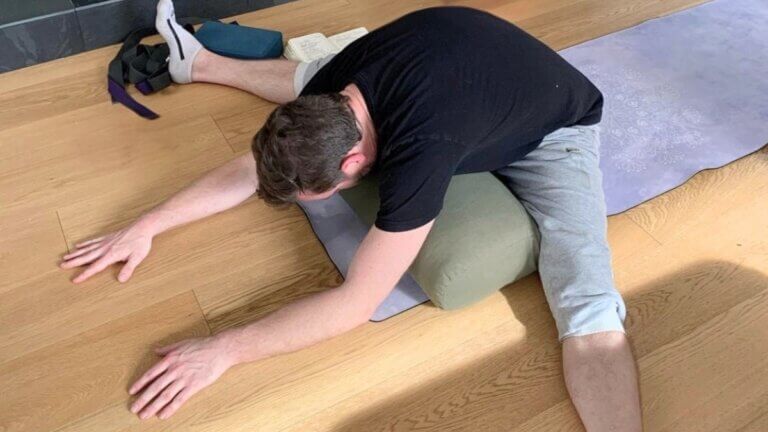
Muscles, Joints, and Target Areas
Understanding what’s happening anatomically helps you practice smarter and avoid injury.
Primary muscles stretched in Dragonfly:
- Adductor longus, brevis, and magnus (inner thighs)
- Gracilis (inner thigh and knee stabilizer)
- Hamstrings (biceps femoris, semitendinosus, semimembranosus)
- Erector spinae (lower back muscles along the spine)
Connective tissues and joints engaged:
- Hip joint capsules (where the femur meets the pelvis)
- Fascia along the inner legs and lower back
- Ligaments supporting the hip and sacroiliac joints
In Yin Yoga, we’re not just stretching muscles. We’re applying gentle stress to the fascia and connective tissues, which respond differently than muscle fibers. That’s why the holds are long, and the effort is minimal. You’re giving your body time to adapt and release at the deepest levels.
Beginner Tips for Practicing Dragonfly Safely
If you’re new to straddle or dragonfly pose, these tips will help you avoid common mistakes and get the most out of your practice.
- Start with your legs narrower than you think. You don’t need a full split to get the benefits. A 90-degree angle between your legs is plenty for most people.
- Let your back round. In Yin Yoga, we’re not trying to keep a perfectly straight spine like in active yoga. A rounded back is fine as long as you’re not feeling pain.
- Use props from the start. Don’t wait until you’re uncomfortable to grab a bolster or blanket. Set yourself up for success before you even begin the hold.
- Breathe naturally. You don’t need to do deep-breathing exercises or control your breathing. Just let it flow and notice how your body softens with each exhale.
- If you feel numbness or tingling, back out. Nerve sensations are different from the dull ache of a stretch. Never push through numbness.
Your first time in this pose might feel intense. That’s normal. It gets easier the more you practice.
How Long Should You Hold Dragonfly Pose
How Long Should You Hold Dragonfly Pose
In Yin Yoga, time is part of the practice. The longer you hold, the deeper the connective tissue release.
Typical hold times:
- Beginners: 2 to 3 minutes
- Intermediate: 3 to 5 minutes
- Advanced: 5 to 7 minutes
Start conservatively and build up over time. If 2 minutes feels like forever, that’s your starting point. If 5 minutes feels easy, stay longer.
You’ll know you’ve held long enough when you feel a shift in sensation. The initial intensity often softens after the first minute or two as your tissues begin to release.
Use a timer so you’re not constantly checking the clock. Close your eyes and let yourself settle in.
When to Practice Dragonfly in Your Sequence
Placement matters in Yin Yoga. Some poses prepare your body for others, and some for the end of your practice.
Dragonfly works well:
- In the middle of your sequence, after you’ve warmed up your hips with gentler poses like Butterfly or Sleeping Swan. It’s too intense to start with cold muscles.
- Paired with Backbends like Seal or Sphinx Pose to balance the energy and give your body a variety of angles.
- Before Savasana as one of your final deep stretches, the long hold and forward fold naturally calm your nervous system and prepare you for rest.
Avoid practicing the Dragonfly or Straddle pose immediately after vigorous exercise, when your muscles are overly warm. You want gentle warmth, not heat that masks your body’s signals.
Counterposes for Dragonfly Pose
After a long hold in a deep forward fold, your body needs a reset before moving on.
Best counterposes:
- Windshield Wipers: Lie on your back with knees bent and feet wide. Let your knees drop side to side to release tension in the hips and lower back.
- Constructive Rest: Lie on your back with knees bent and feet flat on the floor. Let your knees touch and relax completely for 1 to 2 minutes.
- Supine Twist: A gentle spinal twist helps neutralize your spine and releases any residual tightness from the forward fold.
- Child’s Pose: If you prefer staying on the floor, a supported Child’s Pose with a bolster under your torso gives your hips and spine a gentle release.
Hold for 30 seconds to 1 minute in your counterpose. Rushing out of a Yin pose and into the next one defeats the purpose.
Related Yin Yoga Poses
If you love Dragonfly or Straddle Pose, these poses will complement your practice and target similar areas from different angles.
- Butterfly Pose: Targets the inner thighs and groin with a bent-knee forward fold.
- Sleeping Swan (Yin Pigeon): Deep hip opener that focuses on the outer hips and glutes.
- Caterpillar Pose: Seated forward fold with legs together that stretches the hamstrings and spine.
- Saddle Pose: Reclined quad and hip flexor stretch that balances the front and back body.
Rotating through these poses gives your body variety while still working on hip mobility and flexibility.
Dragonfly / Straddle Pose isn’t about how far you can fold. It’s about how deeply you can let go. Your hips carry more than just tightness. They hold stress, old emotions, and patterns your body has been gripping for years.
This pose gives you permission to soften, breathe, and release what no longer serves you. The stretch is just the beginning. The real transformation happens when you stop forcing and start allowing.
Dragonfly Pose FAQ
What is Straddle Pose in Yin Yoga?
Straddle Pose is another name for Dragonfly Pose. It’s a passive, wide-legged seated forward fold practiced in Yin Yoga to release tension in the inner thighs, groin, hamstrings, and lower back. The pose uses gravity and long holds to work on the fascia and connective tissues rather than just the muscles. You’ll hold it for 3 to 5 minutes, allowing your body to soften and release without forcing the stretch.
What are the benefits of Dragonfly?
Dragonfly releases chronic tightness in the inner thighs and groin, increases hip mobility, decompresses the lower spine, and stretches the hamstrings without strain. It stimulates circulation to the pelvic region and targets the Kidney, Liver, and Urinary Bladder meridians, which can support emotional release and vitality. Regular practice helps improve overall hip flexibility and range of motion while calming the nervous system.
How long should you hold Dragonfly?
Beginners should hold Dragonfly for 2 to 3 minutes. Intermediate practitioners can hold for 3 to 5 minutes, and advanced students may hold for 5 to 7 minutes. The longer hold times allow your fascia and connective tissues to release. Start conservatively and build up over time. You’ll often feel the initial intensity soften after the first minute or two as your body begins to let go.
Is Dragonfly safe for beginners?
Yes, Dragonfly is safe for beginners when practiced with proper modifications and props. Use a bolster to support your torso, sit on a folded blanket to elevate your hips, and start with your legs at a narrower angle. You don’t need to fold deeply to get the benefits. Listen to your body, find a comfortable edge, and never push through pain or numbness. If you have any injuries or chronic conditions, practice with a qualified teacher first.
What should I do if Dragonfly feels uncomfortable?
If Dragonfly feels uncomfortable, add more props or reduce the stretch’s intensity. Sit on a folded blanket or bolster to tilt your pelvis forward, rest your torso on a bolster instead of folding down, or bring your legs closer together. You can also bend your knees slightly if your hamstrings are tight. If you feel sharp pain, numbness, or tingling, come out of the pose immediately. Discomfort should feel like a dull stretch, never sharp or shooting sensations.
Practice Yin Yoga with us
Join Bernie Clark and Diana Batts for their weekly live online Yin Yoga Classes, or practice with their recordings. Available in the Welcome to the Yinside Subscription.

Kevin Parenteau
You Love Yoga, We Love Yoga—Let’s Stay Connected
Get yoga tips, a little inspiration, and friendly emails—because yoga is better with friends.
🔒 No spam. No selling your data. Ever.