Yoga Sculpt combines yoga-based movement with strength training and, in many classes, cardio. Here’s what to expect in your first class, including weights, intensity, equipment, benefits and how to get started.
In This Article
- What Is Yoga Sculpt?
- What Happens in a Typical Yoga Sculpt Class?
- What Does Yoga Sculpt Feel Like Compared With a Regular Yoga Class?
- Weights, Equipment & Intensity
- Is Yoga Sculpt Beginner-Friendly?
- What Are the Benefits of Yoga Sculpt?
- Does Yoga Sculpt Replace Strength Training?
- What Should You Wear and Bring?
- Five First-Class Mistakes to Avoid
- Is Yoga Sculpt Really Yoga?
- For Yoga Teachers: Teaching Sculpt Is More Than Adding Weights
- Yoga Sculpt FAQ
Yoga Sculpt can look a little confusing from the outside.
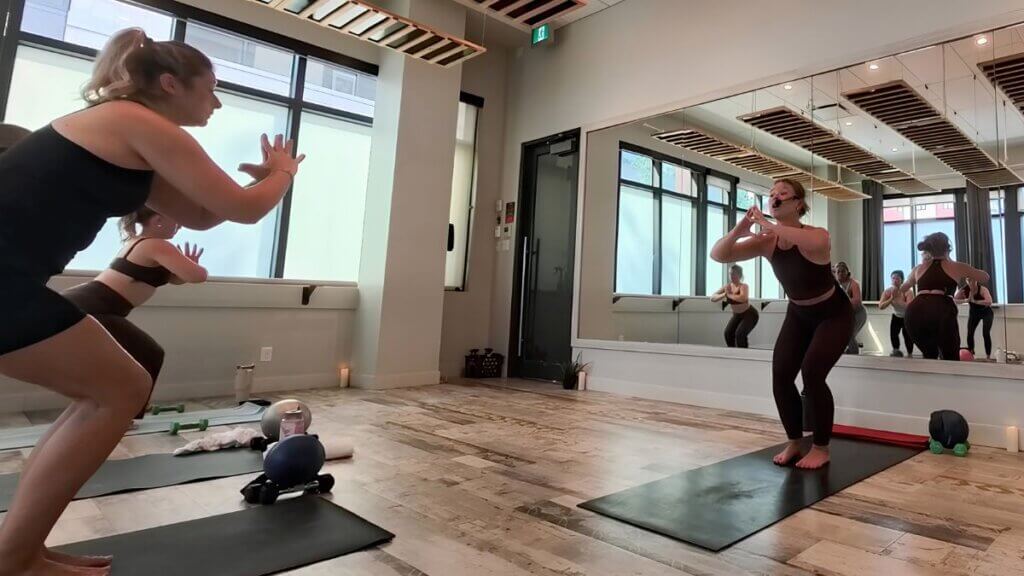
You see yoga mats and familiar poses, but then the dumbbells come out. A Warrior sequence might lead into squats or rows, the music may get louder, and suddenly the class feels like it has one foot in the yoga studio and the other in the gym.
I think that overlap is exactly what makes Yoga Sculpt interesting — but it is also why your first class can be difficult to picture.
There isn’t one standardized Yoga Sculpt format. Some classes are heated and fast-paced, with cardio intervals and Vinyasa-style movement. Others put much more emphasis on controlled strength work, mobility and bodyweight exercise. You may use dumbbells, resistance bands, Pilates balls or very little equipment at all.
What they generally share is an attempt to bring yoga-based movement together with strength and fitness training. How that combination feels depends a great deal on the teacher and the way the class is designed.
What Is Yoga Sculpt?
Yoga Sculpt is a modern fusion class that combines elements of yoga with strength and conditioning.
Many classes retain familiar yoga postures and sequencing—such as Chair Pose, Warriors, lunges, balances and flowing transitions—but layer in additional resistance through dumbbells, resistance bands, bodyweight exercises or other equipment.
Strength exercises might include squats, lunges, rows, presses, curls or triceps work. Some classes also include cardiovascular intervals or faster sequences intended to increase the overall intensity.
This is where I think an important distinction gets lost: Yoga Sculpt is not simply yoga with a pair of dumbbells in your hands.
Once we add resistance, repetition and fatigue, we are asking different things of the body. We have to think about which movements make sense to load, whether the exercise still serves a useful purpose, and what happens to movement quality as someone gets tired.
For a longtime yoga practitioner, some of the strength and conditioning may feel unfamiliar. Someone coming from Pilates, the gym or group fitness may have the opposite experience — the resistance work feels natural, while the yoga postures, transitions, balance and attention to breath are newer.
I like that Yoga Sculpt asks both sides to learn something.
What Happens in a Typical Yoga Sculpt Class?
There is no universal sequence, but most well-rounded Yoga Sculpt classes contain some combination of five elements.
1. Warm-Up and Yoga-Based Movement
A class will generally begin by preparing the body for more demanding movement.
That may include breathing, mobility work, gentle yoga postures, Sun Salutations or a progressive flow using movements that will appear again later in the class.
If the class is fast-paced, this part matters. Moving from sitting at a desk all day directly into loaded squats, lunges or shoulder work is very different from gradually introducing those patterns first.
2. Strength and Resistance Work
This is where the “sculpt” part becomes most obvious.
The teacher may introduce dumbbells, resistance bands, a small ball or simply use bodyweight resistance. Exercises can be incorporated into yoga-inspired sequences or taught as dedicated strength blocks.
You may see familiar yoga shapes used as starting positions, but you can also expect movements that would look at home in a conventional fitness class.
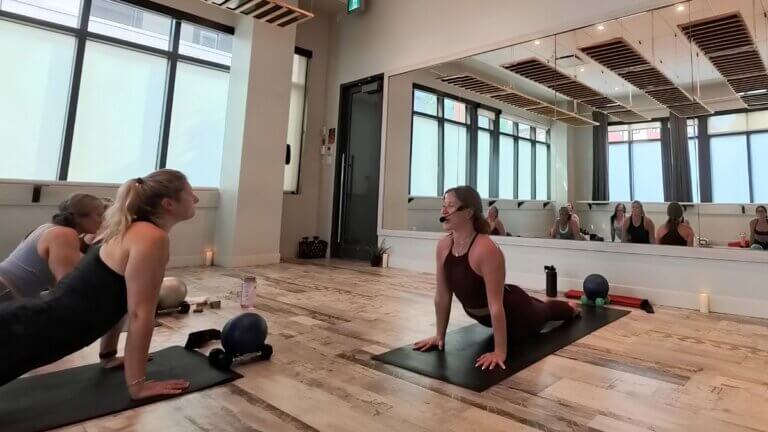
A Yoga Sculpt session might therefore move from Warrior II into a lunge sequence, from Chair Pose into squats, or from a plank-based yoga transition into focused upper-body or core work.
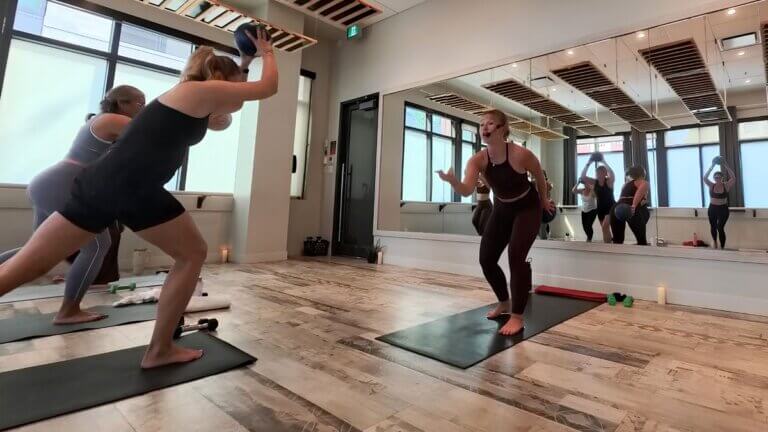
The goal should not be to make every yoga pose more difficult by adding a dumbbell. Resistance needs a purpose.
3. Cardio or Conditioning
Many Yoga Sculpt classes include cardiovascular work, but cardio is not mandatory for something to be called Yoga Sculpt.
Depending on the format, conditioning might appear as short intervals between strength blocks, quicker transitions, low-impact movements, or more vigorous exercises.
Some formats make cardio a central feature; others lean more heavily toward strength and yoga. So if jumping, high-intensity intervals or a very fast class are not what you are looking for, read the class description rather than assuming every Yoga Sculpt class will be the same.
4. Core, Balance and Integrated Movement
Yoga already asks the body to stabilize itself in unusual positions. Yoga Sculpt can build on that by combining balance, unilateral movements and resistance.
Standing on one leg while managing an external load, for example, asks something different of the body than performing the same movement with two feet firmly planted.
This is also where good class design matters. More complicated is not necessarily more effective.
5. Cool-Down
After the more demanding part of class, expect the pace to decrease.
A cool-down may include familiar yoga stretches, slower mobility work, breathing or a short Savasana.
Some Yoga Sculpt classes feel much more like fitness classes than traditional yoga for most of the hour. Returning to slower movement at the end can create a useful transition rather than stopping abruptly after the final strength set.
What Does Yoga Sculpt Feel Like Compared With a Regular Yoga Class?
If you usually practice Hatha or Vinyasa yoga, some of the movement vocabulary may be familiar—but the training demands can feel quite different.
You are more likely to encounter:
- repeated strength exercises rather than moving into a posture once or twice
- external resistance such as dumbbells or bands
- more muscular fatigue
- faster transitions or conditioning intervals
- upbeat music and more prominent use of rhythm
- exercises targeting particular muscle groups
- more explicit modifications and progressions based on strength or fitness level
You may also find that you have less time to think about each individual pose because there is simply more information coming at you: the yoga position, the exercise, the resistance, the repetitions and sometimes the music.
That does not make Yoga Sculpt inherently “advanced.” But it can make the first class feel busy. Knowing that beforehand helps.
Weights, Equipment & Intensity
What Equipment Is Used in Yoga Sculpt?
The most common equipment is light-to-moderate dumbbells, but classes may also use resistance bands, Pilates or stability balls, yoga blocks, sliders, ankle weights, or bodyweight resistance only.
Some studios supply everything. Others expect students to bring certain items. And equipment should never be confused with difficulty.
A bodyweight exercise performed with good control can be challenging. Adding resistance does not automatically make an exercise better.
How Heavy Should Your Weights Be?
This may be the most useful thing to know before your first Yoga Sculpt class:
Start lighter than your ego suggests.
I would resist the temptation to think there is one “correct” Yoga Sculpt weight.
The same dumbbells can feel completely different depending on what you are doing with them. A weight that feels comfortable in a squat may be far too much for repeated shoulder work. And something that feels easy for the first five repetitions may be a very different story a few minutes later.
What matters more to me is whether you are still controlling the movement. Resistance should challenge you without taking away your ability to move with awareness.
So for a first class, I would choose a weight that allows you to:
- maintain control through the full movement
- keep breathing rather than bracing unnecessarily
- follow the teacher without rushing
- recognize when your technique begins to change
- put the weights down when you need to
There is nothing wrong with doing part—or all—of a Yoga Sculpt class without weights.
Is Yoga Sculpt Heated?
Sometimes. Not always.
Some well-known studio formats teach Sculpt in heated rooms; other Yoga Sculpt and strength-yoga formats are not defined by heat at all.
Heat is therefore a studio choice, not a defining requirement of Yoga Sculpt.
If you are considering a class, check whether the room is heated, approximately how hot it is, whether cardio is included, the class level, and whether equipment is provided.
Those details tell you more about what you are walking into than the words Yoga Sculpt alone.
Is Yoga Sculpt Beginner-Friendly?
It can be.
But “beginner-friendly” depends as much on the class design and instruction as it does on the exercises.
You do not need to be exceptionally flexible or strong. However, if you are completely new to both yoga and strength training, learning everything simultaneously can be a lot. Taking a few beginner yoga or fitness classes first may make Yoga Sculpt easier to follow.
For a first class:
- tell the teacher you are new
- choose lighter weights
- take the bodyweight option when needed
- focus on the movement before adding resistance
- rest when you need to
- do not worry about matching every repetition
Missing three repetitions because you stopped to reset your position is not failure. It is often a better training decision than continuing with movement you can no longer control.
What Are the Benefits of Yoga Sculpt?
Yoga Sculpt can be an efficient way to combine several types of physical activity within one class.
Strength and Muscular Endurance
Adding external resistance gives muscles a different challenge than yoga alone.
Depending on the exercises, load, repetitions and how the program progresses, Yoga Sculpt can contribute to muscular strength and endurance.
Resistance training itself is well supported as part of a healthy exercise routine. Current public-health guidance recommends adults include muscle-strengthening activity on at least two days each week.
Cardiovascular Conditioning
Classes that use continuous movement or dedicated conditioning intervals can also challenge cardiovascular fitness.
How much depends entirely on the class. A slower strength-focused Yoga Sculpt session and a heated class with repeated cardio intervals are not physiologically identical workouts.
Balance and Body Awareness
Yoga-based standing postures, unilateral exercises and transitions can require balance, stabilization and awareness of where the body is in space. Adding resistance can increase that demand.
Mobility and Flexibility
Because Yoga Sculpt retains yoga-inspired movement and stretching, mobility and flexibility can remain part of the session rather than being separated from strength work.
Variety
There is also a less scientific benefit that matters: some people simply enjoy it.
A training method you like enough to practice consistently has an advantage over the theoretically perfect workout you never want to do.
Does Yoga Sculpt Replace Strength Training?
Not necessarily—and this is where some Yoga Sculpt marketing gets ahead of itself.
A class can absolutely provide meaningful resistance exercise, particularly for someone who is newer to strength training.
But Yoga Sculpt is not automatically equivalent to a structured resistance-training program.
Building substantial strength or muscle over time generally requires some form of progression: gradually increasing resistance, training volume, difficulty or another meaningful training variable.
A high-repetition class using the same light dumbbells every week may improve muscular endurance without providing the same stimulus as progressively heavier strength training.
That does not make Yoga Sculpt ineffective. It means the answer depends on your goal.
If you want general fitness, movement variety, strength endurance, balance and conditioning, Yoga Sculpt can fit beautifully into a broader routine.
If your main goal is maximal strength or substantial muscle growth, you may still want dedicated progressive resistance training.
What Should You Wear and Bring?
Comfortable clothing that allows you to move freely is usually enough.
For an in-person class, consider:
- a yoga mat
- water
- a towel, particularly for a heated class
- clothing you are comfortable sweating in
- any equipment the studio asks you to bring
Most yoga-studio formats are practiced barefoot, but fitness-oriented classes can vary. Again, check the studio rather than assuming.
Five First-Class Mistakes to Avoid
Choosing Weights That Are Too Heavy
More weight is not automatically more effective. If you cannot control the movement, lighten the load or put the weights down.
Trying to Keep Up at All Costs
The instructor is providing a class—not setting a mandatory speed limit. Take the time you need.
Treating Every Exercise as a Yoga Pose
Once external resistance and repeated movement are introduced, the demands change. A familiar-looking shape does not necessarily have the same purpose it had in your yoga practice.
Ignoring Fatigue
Fatigue can change coordination, posture and movement strategy. That is information, not an inconvenience.
Assuming Every Yoga Sculpt Class Is the Same
This one is worth repeating. Heat, cardio, equipment, class length, music, sequencing and intensity vary considerably. Finding the right Yoga Sculpt class may take more than trying one.
Is Yoga Sculpt Really Yoga?
I suspect this question creates more debate than it needs to.
Yoga Sculpt is not a traditional yoga lineage. It is a modern hybrid that brings fitness and resistance training into a yoga-based setting. I don’t think we need to pretend otherwise.
But I also don’t think adding a dumbbell automatically removes the yoga.
For me, the more interesting question is what remains in the way the class is taught. Is there awareness of breath? Are students encouraged to notice their own experience? Are options offered rather than forcing everyone into the same version of a movement? Is there still some sense of attention rather than simply getting through as many repetitions as possible?
One Yoga Sculpt class may retain a great deal of that. Another may function primarily as a fitness class using yoga-inspired shapes. Both can be worthwhile, but they are not necessarily offering the same experience.
Yoga does not need to do every job in our fitness routine, and strength training does not need to replace yoga. Yoga Sculpt simply gives us an interesting place where the two can meet.
For Yoga Teachers: Teaching Sculpt Is More Than Adding Weights
This is the part I think experienced yoga teachers need to pay particular attention to.
It is very easy to look at Yoga Sculpt and think, I already know how to sequence and cue a yoga class. I’ll add some weights and fitness exercises and I’m there.
But good teaching rarely works that way.
As yoga teachers, we already understand sequencing, communication and how to guide a room. Yoga Sculpt asks us to keep those skills while adding another layer of knowledge. Resistance, fatigue, exercise selection, progression, music and tempo all affect what we are asking students to do.
That means there are some additional things we need to understand:
- basic biomechanics and muscle actions
- strength, cardiovascular and flexibility training
- exercise selection
- fatigue and common movement compensations
- how and when to use equipment
- how to progress or regress an exercise
- music, tempo and counting
- how to build a class from warm-up through cool-down
- how to preserve movement quality as intensity increases
That is the difference between simply putting dumbbells into a yoga sequence and designing a Yoga Sculpt class with purpose.
At Asana at Home, Lauren McBain brings more than a decade of yoga and fitness teaching experience across yoga, barre, Pilates, sculpt and strength-based formats. Her approach to Yoga Sculpt Teacher Training builds on the skills qualified yoga teachers already have while introducing the fitness principles needed to teach this kind of class well.
Ready to Learn How to Teach Yoga Sculpt?
Our 16-hour on-demand Yoga Sculpt Teacher Training with Lauren McBain explores strength, cardio, biomechanics, equipment, music, cueing, sequencing, modifications and progressions for qualified yoga teachers who want to expand into fitness-based teaching.
Explore Yoga Sculpt Teacher Training →
Yoga Sculpt FAQ
Does Yoga Sculpt use weights?
Often, but not always. Dumbbells are common, while some classes also use resistance bands, balls or bodyweight exercises. The exact equipment depends on the class.
Is Yoga Sculpt good for beginners?
It can be. Look for an all-level or beginner-friendly class and start with light resistance or bodyweight. Some familiarity with common yoga positions can help in faster-paced formats.
Do I need to be flexible to do Yoga Sculpt?
No. Yoga Sculpt is not a flexibility test. Mobility varies from person to person, and a well-taught class should provide options.
Does Yoga Sculpt build muscle?
Yoga Sculpt can provide a muscle-strengthening stimulus, particularly when resistance is sufficiently challenging. How much muscle or strength someone develops depends on load, exercise selection, training volume, recovery and whether the resistance progressively increases over time.
Is Yoga Sculpt cardio or strength training?
It can include both. Most Yoga Sculpt formats contain resistance work, while many also include cardiovascular intervals or continuous higher-intensity movement.
Is Yoga Sculpt always hot?
No. Some well-known Yoga Sculpt programs are heated, but heat is not required for a class to be Yoga Sculpt.
How often should you do Yoga Sculpt?
There is no universal frequency. It depends on how demanding the class is, what other strength or cardiovascular exercise you do, and how well you recover. If the class provides a substantial strength-training stimulus, give those muscle groups appropriate recovery before training them hard again.
Is Yoga Sculpt the same as Pilates?
No. Both can include strength, control and core work, but Yoga Sculpt is generally built around yoga-inspired movement combined with resistance and conditioning. Pilates has its own distinct movement system and principles.
The Bottom Line
Your first Yoga Sculpt class may feel familiar and completely new at the same time.
You may recognize the yoga poses but notice that the resistance, repetition, music and pace change the experience. You may discover that you like the strength work but prefer less cardio—or that an energetic class is exactly what your regular yoga practice has been missing.
The most important thing is not to arrive knowing every movement.
Arrive knowing that you can reduce the weight, slow down, take a modification or rest.
A good Yoga Sculpt class should give you somewhere to go—not demand that everyone in the room start from the same place.