How Students Actually Learn Yoga (And How Teachers Can Support Real Integration)

As yoga teachers, we spend years learning how to sequence, cue, adjust, and hold space. But one of the most overlooked teaching skills is understanding how students actually learn.

Because even the most beautifully sequenced class can fall flat if it doesn’t meet students where their nervous systems, bodies, and minds are truly ready to receive.

Yoga is not just physical education. It is somatic education, emotional regulation, nervous system training, and embodied awareness development — all at once. And that means learning in yoga unfolds differently than it does in most classrooms.

Why Learning in Yoga Is Different

In yoga, students aren’t just absorbing information — they are:

  • Repatterning movement habits
  • Regulating their nervous systems
  • Building proprioception
  • Processing emotions
  • Developing interoceptive awareness
  • Forming new beliefs about their bodies

All of this happens simultaneously.

This is why verbal explanation alone so often fails. Students are learning through sensation, timing, safety, and repetition — not just through understanding concepts.

No two students process this information the same way. Some need to feel first. Some need to understand first. Some need repetition. Some need reflection.

The more ways you can support learning, the more accessible and transformative your classes become.

A Learning Model That Actually Fits Yoga Students

Many yoga teachers recognize this pattern instinctively. Students don’t learn sensation through explanation alone — they learn through experience, reflection, and repeated exploration. In learning science, this process is described in David Kolb’s Experiential Learning Cycle, which moves through doing, observing, making sense, and trying again. When a student “can’t feel it,” they may not be stuck — they may simply be in a different phase of learning.

Diagram illustrating an experiential learning cycle with stages of experience, reflection, understanding, and experimentation.
An experiential learning cycle illustrating how experience, reflection, understanding, and experimentation inform one another over time — mirroring what many yoga teachers already observe in the classroom.

The Four Stages of Learning in a Yoga Class

1. Concrete Experience — Let Them Feel It

Learning begins with experience, not explanation.

Instead of starting with anatomy theory, allow students to enter a pose and feel what’s happening first.

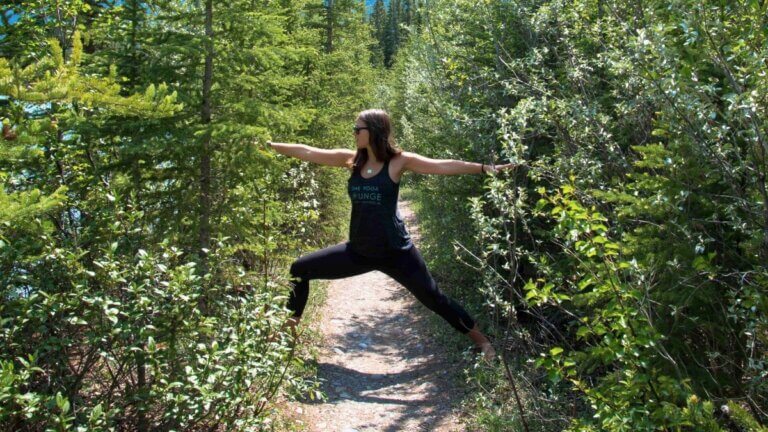
For example, in Virabhadrasana II, invite students to notice sensations in their feet, legs, and hips before offering alignment cues.

This builds curiosity, presence, and internal awareness — the foundation for meaningful learning.

2. Reflective Observation — Invite Awareness

Next, guide students to reflect on what they feel:

  • Where do you sense effort?
  • Where do you feel support?
  • Does anything change when you shift your stance slightly?

These questions develop interoception — the internal listening that turns movement into embodied understanding.

3. Abstract Conceptualization — Share the What and Why

Only now does the explanation truly land.

Once students have a felt reference, you can layer in knowledge:

  • What external rotation in the hip joint is
  • How it works
  • Why it matters

Because the information connects to sensation, it sticks.

4. Active Experimentation — Let Them Apply It

Finally, invite students to explore independently:

  • Apply the same action on the second side
  • Notice it in Trikonasana
  • Observe how it affects balance or ease

This stage empowers students to become active participants in their learning rather than passive followers.
Why This Matters for Your Teaching

When yoga classes support all four stages of learning, they become:

  • More accessible
  • More intuitive
  • More empowering
  • More transformative

Students don’t just do yoga — they understand their bodies, trust their sensations, and develop agency in their practice.

This is how confidence is built.
This is how long-term students are created.

Teaching for Integration, Not Compliance

When learning is rushed, students may copy shapes without understanding them.

But when learning is paced:

  • awareness deepens
  • confidence grows
  • frustration softens

Teaching then becomes less about correction and more about guiding exploration.

Ready to Deepen These Skills?

Developing this kind of teaching intelligence takes practice, reflection, and support.

Many of the principles explored here — embodied learning, nervous system awareness, and teaching for integration — are central to our 300-Hour Advanced Yoga Teacher Training, where teachers refine not just what they teach, but how they teach.

Further Reading

This post draws on David Kolb’s Experiential Learning Cycle, a foundational learning-science model describing how understanding develops through experience, reflection, conceptualization, and experimentation over time.

Reviewed & updated December 30, 2025 by Christina Raskin, ERYT & YACEP

You Love Yoga, We Love Yoga—Let’s Stay Connected

Get yoga tips, a little inspiration, and friendly emails—because yoga is better with friends.

🔒 No spam. No selling your data. Ever.

Scroll to Top

Grab Your Free Morning Yoga Videos