Home » Yoga Blog » Health Blog » Menopause, Modification, and Yoga Practice for Life
Menopause, Modification, and Yoga Practice for Life
I have always loved taking notes and being a meticulous note-taker and journal writer.
By 2022, I had upgraded to taking notes on my iPhone:
56 days no period.
78 days no period.
93 days no period.
164 days.
I reached the eight-month mark with no period.
And then my period arrived.
While I initially thought this was just an anomaly, the inconsistency and variability went on and on for years. My body was teaching me to let go — or, as we like to say in the yoga community, to practice non-attachment.
- By: Fiona Stang
- Published:
- Reviewed: May 15, 2026
Editor’s Note: This is Part 3 of Fiona Stang’s three-part series on yoga, perimenopause, menopause, and how a lifelong practice evolves through change. In Part 1, Fiona reflected on the subtle beginning of perimenopause. In Part 2, she explored uncertainty, listening, and learning to keep showing up. In this final article, Fiona reflects on menopause, modification, non-attachment, and the deeper question that has begun to guide her practice: How can I practice Yoga for the rest of my life?
Key Takeaways
- Menopause does not always bring a clean or dramatic ending to the changes of perimenopause.
- Practice may need to change, but that does not mean it becomes less meaningful.
- Modification is not a sign of weakness or regression; it can be a sign of listening.
- Breath, bandha, drishti, and attention can become deeper anchors when asana feels unpredictable.
- The guiding question becomes: How can I practice Yoga for the rest of my life?
The Anticlimactic Celebration
Finally, the one-year mark and no period arrived.
I had such mixed feelings.
Was this a celebration? Or was this a moment tinged with nostalgia and the thought, “I am getting older”?
I also remember wondering: Will everything go back to normal now?
Wishful thinking.
To be honest, the one-year mark of menopause was a bit anticlimactic. There was no miraculous change for the better. There was no sudden return to the way things had been before perimenopause.
But there was the continuous lesson of letting go.
I had to practice non-attachment to the way my body, emotions, energy, and life used to be.
My joints still hurt. There was a year-long period when my knee didn’t bend properly during practice, even though I could still walk, hike, ski, and play tennis in daily life.
Everything was different.
My patience was tested until I learned to accept that this was my new normal.
I still had hot flashes. I still woke up in the middle of the night. I started playing musical beds in my house so I wouldn’t wake my husband with all my tossing and turning.
Everything did not simply stop and return to “normal.”
Modification Is Not Limitation
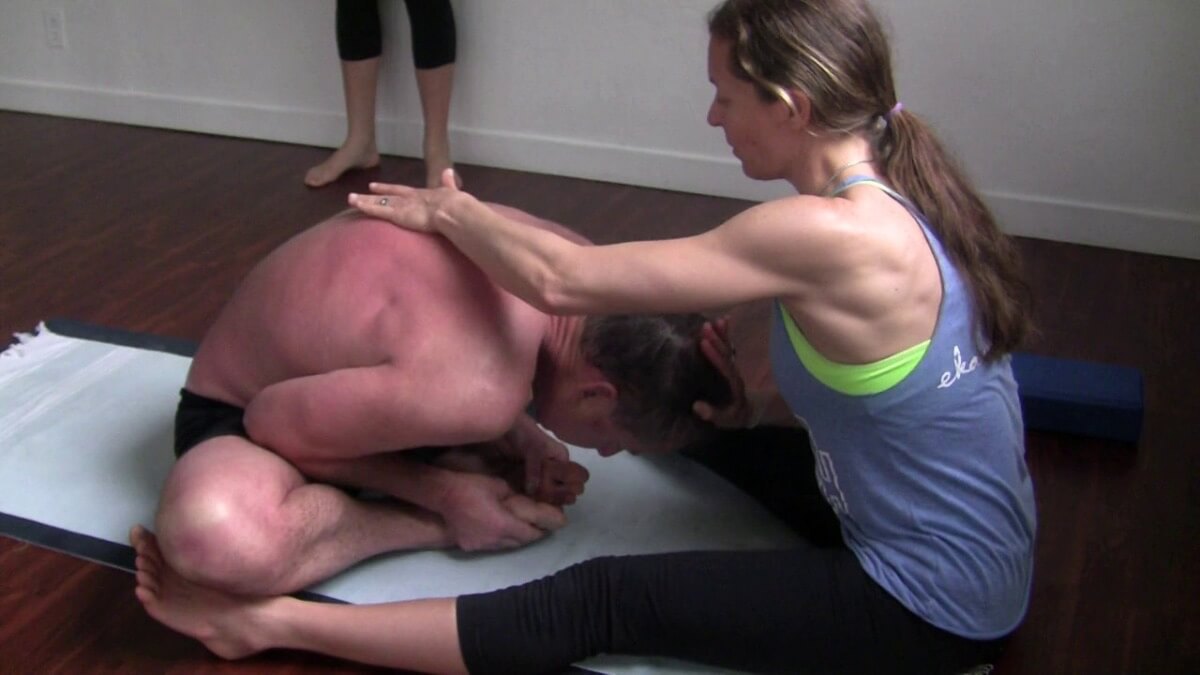
I was good at offering modifications to students when needed.
If someone had a broken leg, I could create a practice for them. When my son sprained his ankle ski racing, I helped him navigate his yoga practice and modified everything as needed.
I was great at offering suggestions to other people:
Come to the yoga studio and we’ll sort it out.
I had a huge bag of tricks and could often find a method that would work for the situation.
So with perimenopause and menopause, it was time to apply those same principles to myself.
And honestly, we need a new word for “modification,” because it can imply limitation when, in reality, it is another way to explore oneself deeply through asana, breath, and drishti.
This is just our practice.
The forms may change, as they should and will.
Modifications are great and useful. Postures may also change back to how we used to do them — or they may not.
In menopause, we are not fixing anything. We are not broken.
We are becoming wiser listeners.
Our practices should most likely change. What does not need to change is our showing up for ourselves and giving ourselves the gift of practice — time to breathe, be present, focus on breath, bandha, and drishti.
Applying the Practice to Myself
I applied these same principles to my own practice during perimenopause and menopause.
During the early era of menopause — or the end of perimenopause — I had a lot of joint pain. I didn’t quite realize at the time that this was most likely hormonally influenced.
I would go to my regular massage therapist, someone I had seen on and off for probably 25 years. He knew my body well. During this time, I complained of discomfort with movement.
The pain was not necessarily the limiting kind. I just noticed that things were different when I practiced.
I had so much inflammation in my body that my rings no longer fit my fingers. The arthritis in my wrists was worse than ever when I taught and practiced. I seemed to have tendon sensitivity that moved around — from my legs to my hamstrings, to my glutes, to my forearms.
After one massage, my bodyworker said to me:
“Nothing’s wrong with your body. Your body seems fine. I think it’s your hormones that are changing.”
Certain postures were no longer accessible.
And then suddenly, out of nowhere, they were accessible again.
I was unable to fully close my knee, but structurally, everything seemed fine. Nine months later, I could close my knee fully again.
Every day was a surprise.
Practice was a mystery. I never really knew what practice would be, so I chose to find a constant.
The constant was: Show up and see what happens.
So this became the mantra: Show up, Honour your body, Practice how you need, Modify when needed, Treat modifications with positive thoughts, Keep listening, Keep showing up.
Going Deeper Than Asana
I started choosing mini-projects when I practiced.
I began with the most obvious one: the breath.
Follow my breath through the practice and notice irregularities.
Honestly, you could spend a lifetime on this.
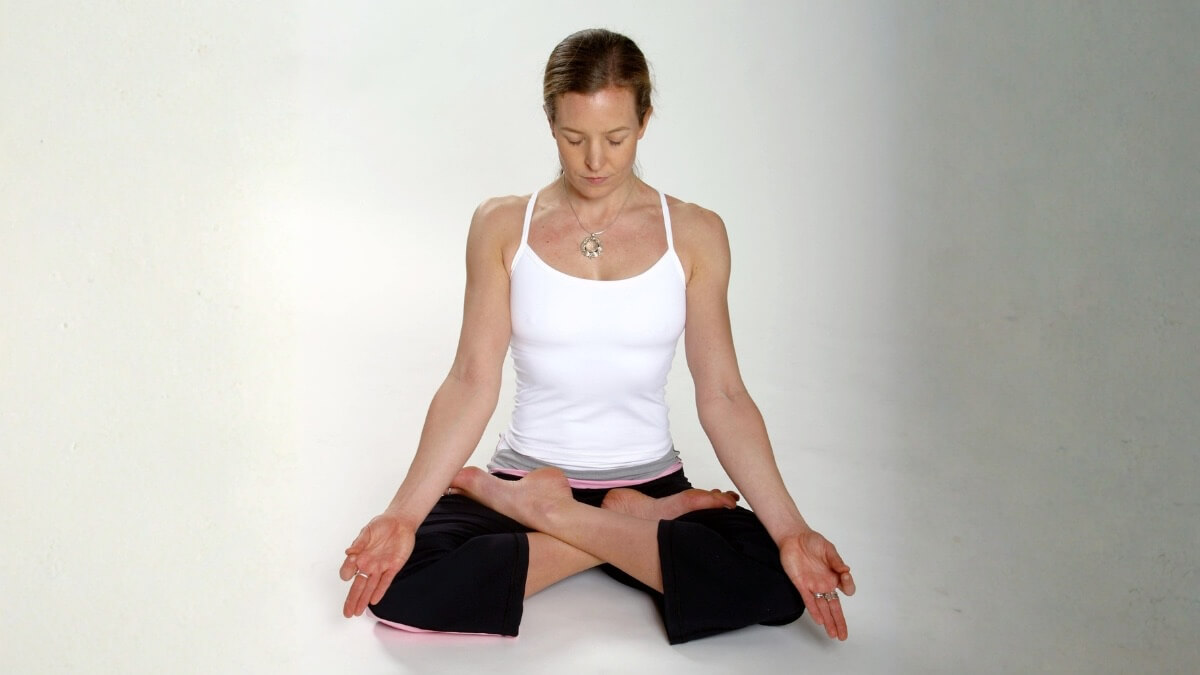
Then I started noticing my connection to mula bandha when I practiced. I focused on this for a year, and wow, it was incredible to move beyond all the physical ailments I mentioned previously and simply flow.
Was I connected to mula bandha or not?
I learned so much as I continued to modify my way through practice. Having a deeper focus helped me move beyond what I could or could not do and delve into the deeper depths of yoga.
Learning From Other Women
I started reading. And as you probably know, if you are reading anything about menopause or perimenopause, there is so much information out there that it is hard to sift through what is good and what is not so good.
I continued listening in my practice and started talking to other female yoga practitioners.
I was lucky. Many of the women I knew from Mysore, India, in the old days were my age or older.
We did not necessarily talk about what we did in our practice asana-wise. We talked more about hormones and what people were doing to help alleviate symptoms.
Everyone was modifying, I think, at this phase — or they just stopped practicing.
Yoga affected me profoundly on an emotional and spiritual level. It gave me strength and grace and helped me stay calmer during this hormonal transition.
Midline.
So quitting practice because I could no longer create certain forms in my body was never an option for me.
I was lucky to be a teacher and to teach students of all body types. I had no problem modifying my practice for as long as I needed.
So my practice continued.
How Can I Practice Yoga for the Rest of My Life?
If I had to give anyone advice on how to practice through menopause, it would be this:
Create a schedule.
Create a backup plan.
Create another backup plan.
Then keep practicing.
Show up for yourself.
You will never regret a practice.
Try not to define practice by what your asanas look like.
Go deeper.
Go into the breath, mula bandha, and drishti. Go back to the bare bones of why you practice and let that be the focus.
When you’re on your mat, listen to what you need that day.
Sleep during this transition is so important.
I was finding that my best sleep was between 3 and 8 a.m. However, my yoga classes required a 4:40 a.m. wake-up.
For 30-plus years, 4:40 a.m. was my regular wake-up time. It was structured into my DNA.
During this period, I was tired, and 4:40 a.m. no longer worked for me.
Suddenly, it was hard to get up when I had been tossing and turning at night and playing musical beds.
I started using my weekends to sleep in and rest more. I even stopped teaching on Mondays to give myself more rest.
These changes were a shock for the Type A Wall Street woman who never missed a practice for years.
But this was me listening and was my new yoga practice.
Two-hour practices were sometimes one-hour practices or half-hour practices.
But again, move beyond asana.
Keep showing up.
That’s what I did.
I just kept showing up and listening.
And my mantra was: How can I practice Yoga for the rest of my life?
Short Practices Count
I created a sustainable, regular practice.
If I missed my first window on the weekends or because I needed more rest, I could always practice later in a second window.
I think it is important to say that the quality of one’s practice is more important than the duration.
Accumulating yoga postures for the sake of accumulation is not necessarily a practice. It is not the point of yoga.
Yoga is mind control and keeping our mind centered, even, and strong.
As I like to remind my students, short practices count.
Taking mindful breaths throughout the day when you’re feeling anxious is a practice of mindfulness in itself. Doing things to calm your nervous system may be more important than ever during this phase.
Have I mentioned that at times during perimenopause and menopause, I felt more anxious than ever?
I remember once thinking, “I feel like I am 15 again.”
That feeling is when I clued in that my hormones were affecting me.
Yoga Is Not Posture Accumulation
One of my very wise friends, Sharon, describes this phase of life. She describes perimenopause and menopause as a very long, dark portal.
Once you walk inside, you can’t quite make out the end.
It is a dark tunnel. It is mysterious.
So be extra kind to yourself. Be compassionate. Use the practice as a way to resource yourself, your body, and your mind.
If yoga were about posture accumulation, I should have given up years ago.
Yoga is about learning how to listen and be aware.
Postures will come. Postures will go.
But the foundation of yoga — the breath, mindfulness, awareness — I like to think becomes stronger as we age.
Focus on that in your practice.
Practice as Creative Listening
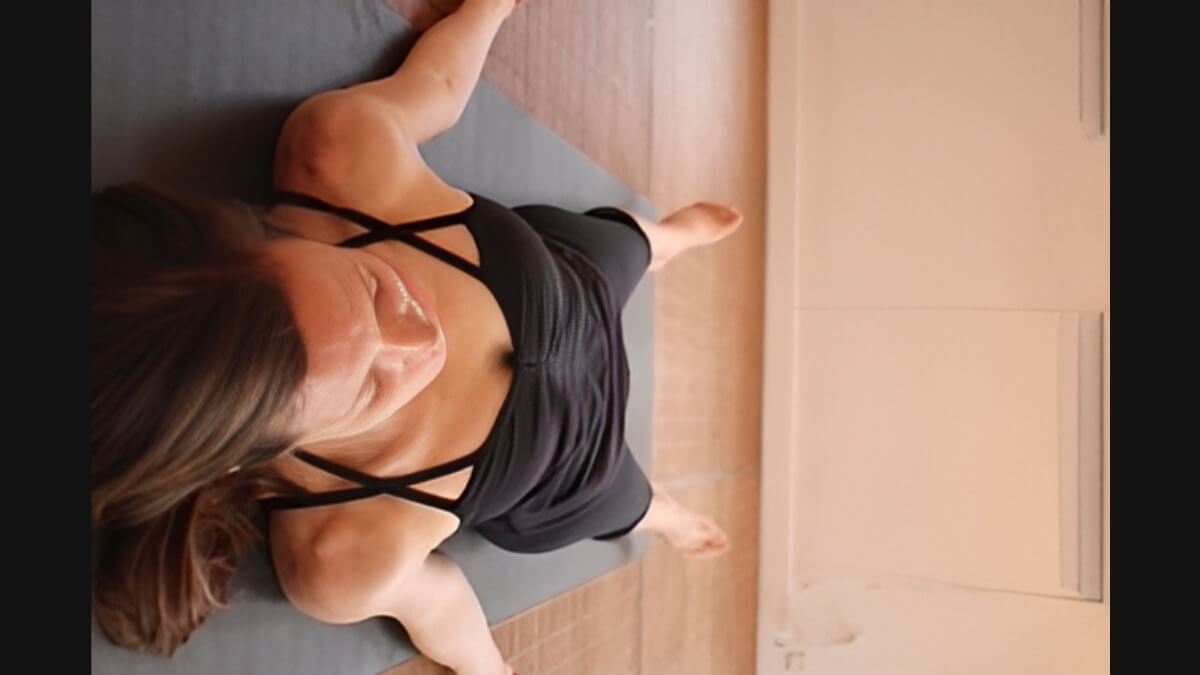
Hormonal shifts, for me, have been a time of listening and creativity.
When my knee wasn’t fully closing, I focused on breath and mula bandha, and modified the form as needed. Nothing was wrong with my body, but things were speaking more loudly.
When my tendons were not cooperating, I modified.
I bent my knees more when my hamstring felt like it was about to pull. I dropped to my knees during my push-ups when my wrists hurt and focused on making my core stronger than ever.
I kept the practice investigative in nature.
I kept it inspiring.
I focused on the furl and unfurl actions of vinyasa linked to breath rather than on whether I was modified or not.
I did seated vinyasa with breath, focusing on my core when my wrists were too sore to lift up.
Modification can become a sign that I am listening and honouring, rather than a sign that I am not progressing or that I am weak.
Softening the Need to Accumulate
In the Western world, we are trained and taught to accumulate.
Accumulate things: possessions, a house, a car, a partner, a degree, a higher degree.
There is this concept of more. Getting more. Being better. Being the best.
That push.
With perimenopause and menopause, for me, this idea of accumulating had to soften.
The whole accumulation of postures had already lost some of its energy when I had children. My practice was so important to me, but my children and extended family were the most important.
My practice became a balm for my soul, and I was simply happy for the time to myself.
Practice was a way to resource my soul and give back to myself.
Inhalation. Exhalation. Repeat.
With perimenopause, my practice had to change.
But the essence of Ashtanga yoga remained unchanged.
To this day, I practice Ashtanga. The form just sometimes looks different.
Perimenopause and menopause can be an opportunity to learn to be fully present and aware.
That is a gift.
These days, my body does not speak to me as loudly. The inflammation feels under control. My joints are not so inflamed.
The worry and nervousness that returned to me around 46 are still there, but I see them as separate from myself. When that entity is speaking more loudly, I am kinder to myself.
I put on guided relaxations and meditations more frequently. I add alternate nostril breathing (nadi shodhana) to my practice more often.
As I look back at these eight years of hormonal flux, I have learned resilience, kindness, compassion, and appreciation.
And I keep showing up.
Inhalation.
Exhalation.
Repeat.
For me, this is the real practice of yoga.
OM OM OM
Continue the Series
Part 1: Yoga for Menopause: When Your Practice Starts to Shift
Part 2: Perimenopause and the Yoga of Listening
Part 3: Menopause, Modification, and the Practice for Life
This final article closes Fiona’s three-part series on yoga, perimenopause, menopause, and how a lifelong practice evolves through change.
Fiona Stang
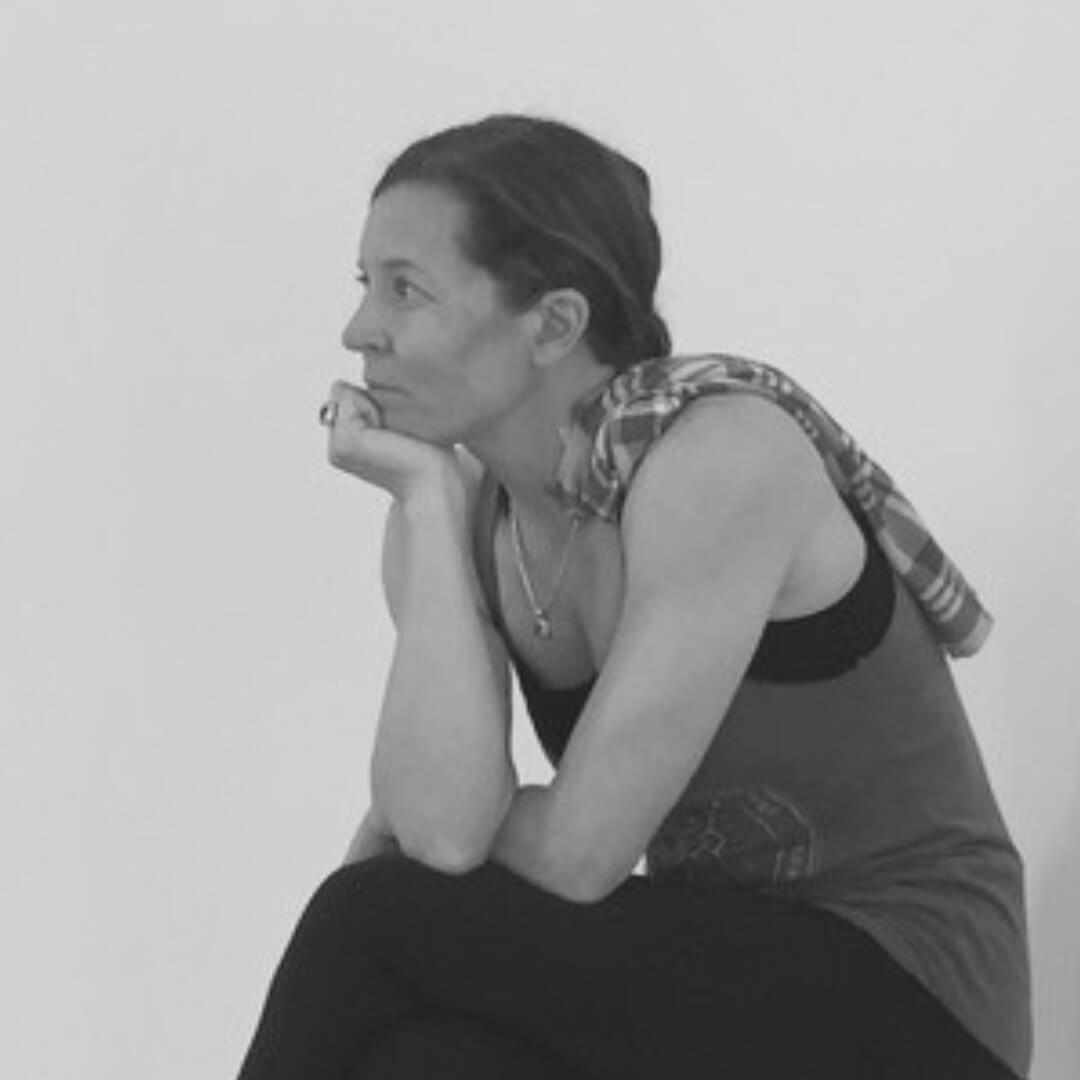
Fiona Stang is the founder of Ashtanga Yoga Vancouver and an Authorized Level 2 Ashtanga yoga teacher. She has practiced and taught Ashtanga yoga for decades, supporting students through a steady, traditional approach while continuing to explore how the practice evolves through different stages of life.
Learn more about Fiona and her teaching at Ashtanga Yoga Vancouver.
You Love Yoga, We Love Yoga—Let’s Stay Connected
Get yoga tips, a little inspiration, and friendly emails—because yoga is better with friends.
🔒 No spam. No selling your data. Ever.