Home » Yoga Blog » Health Blog » Perimenopause and the Yoga of Listening
Perimenopause and the Yoga of Listening
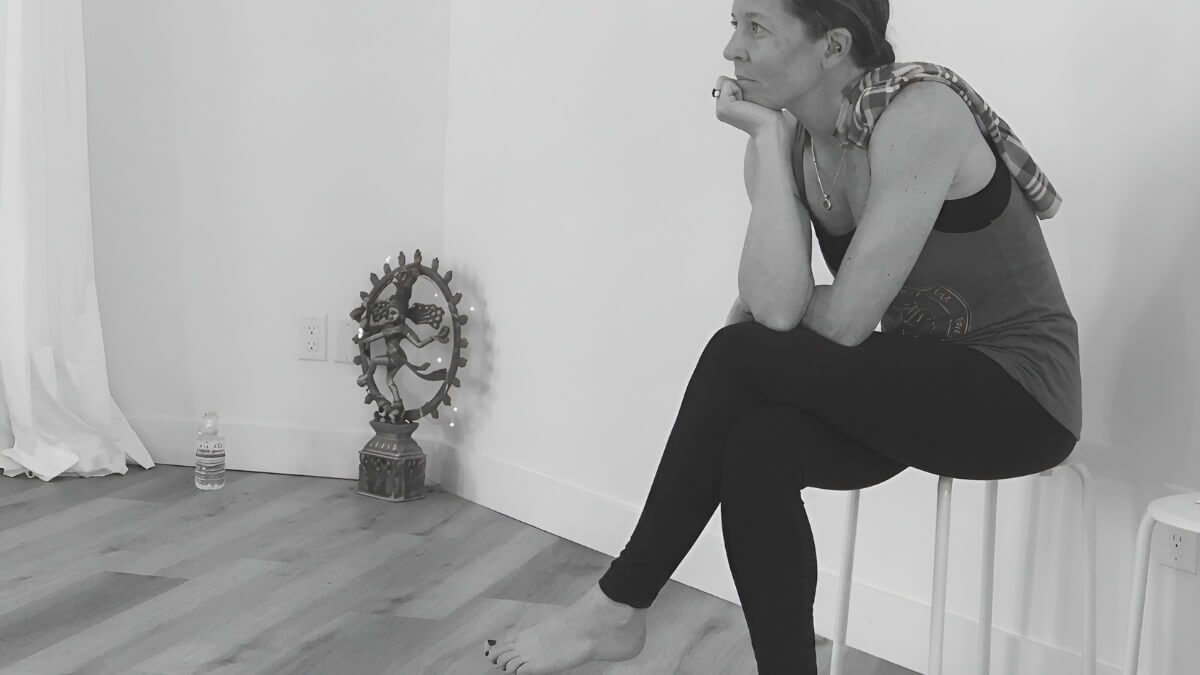
Thirty years after my period began, the pattern shifted yet again.
This was a big shift, but in retrospect, I had no idea how big it would be. It came on gradually, with mixed messages, confusing symptoms, and unpredictable patterns.
Everything I had learned from my periods, my body, and my mind over the previous decades seemed to be thrown up into the air.
To be honest, I do not even think I recognized that this was the beginning of perimenopause. I just knew something was different. Something was changing.
The journaling, the understanding of my cycle, and the patterns I had come to trust shifted ever so slowly before me. But I was not fully aware that my hormones were most likely in flux, mixing things up.
- By: Fiona Stang
- Published:
- Reviewed: May 21, 2026
Editor’s Note: This is Part 2 of Fiona Stang’s three-part series on yoga, perimenopause, menopause, and how a lifelong practice evolves through change. In Part 1, Fiona reflected on menstruation, pregnancy, motherhood, and the subtle beginning of perimenopause. In this article, she explores the uncertainty of perimenopause and how practice became a way to keep listening when familiar patterns began to disappear.
Key Takeaways
- Perimenopause can begin subtly, even before menstrual cycles become obviously irregular.
- Symptoms such as fatigue, dizziness, inflammation, anxiety, sleep changes, and tendon sensitivity can feel confusing when there is no clear explanation.
- A long-term yoga practice can become a resource during uncertainty, especially when the body no longer follows familiar patterns.
- Listening becomes more important than forcing.
- Showing up still counts, even when practice becomes shorter, softer, or more restorative.
When the Old Patterns Disappeared
I had years of normal cycles, cramping, PMS symptoms, pregnancy, birthing babies, raising toddlers, and raising children behind me.
Had all of those experiences prepared me for this shift?
Yes and no.
At this point in my life, I understood the ebbs and flows of my body, literally. I knew what to expect around ovulation in my practice and in my life. I knew what to expect in the two weeks before my period started. I knew the two days before my period might be inwardly reflective and less energetic.
But I also knew it could be the complete opposite. On rare occasions, I could become superwoman in my practice and life overnight.
Still, there was some evident pattern.
Suddenly, all the structures I had come to understand started disappearing and shifting before me.
My period was still regular, but before it even started changing from a 28-day cycle to an unknown, uncertain one, things had already begun to change. In retrospect, I believe they had been changing for some time.
I was suddenly more tired. I had random skin rashes and very itchy skin. My hamstrings started getting agitated when playing tennis, and I ended up with tennis elbow. My tendons were more sensitive everywhere, but I did not make that connection until seven years later.
I noticed random bouts of inflammation in my body and was tested for rheumatoid arthritis.
As I look back, my hormones were shifting, but I had no idea this was most likely hormonal.
All my tests were “normal,” but I was feeling less and less like superwoman.
Trying to Find the New Normal
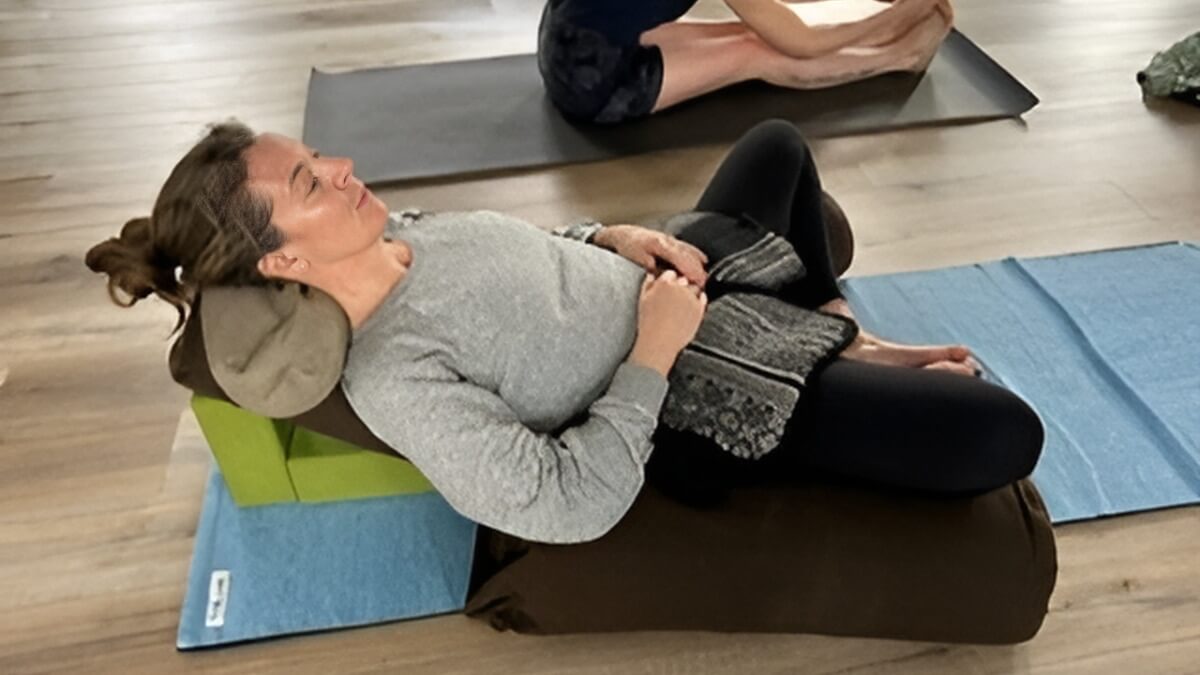
To help with the fatigue, I started adding in a restorative practice once a week. That worked for a bit, but whenever I found something that seemed to be working, it would change again.
The usual patterns I knew and trusted just dropped away.
Sometimes my period was unexpectedly heavy. Sometimes I menstruated two weeks after my period. I wondered if I would ever return to that “normal” feeling in my practice.
Then I went through six months of intense dizziness.
That brought me to my GP, a neurologist, physiotherapists, an MRI, and lots of tests. I was diagnosed as “fine.”
I had strange inflammation in my joints. My rings stopped fitting my fingers. My wrists felt inflamed. And then, suddenly, that would shift back to “normal-ish.”
There was never a new normal.
The dizziness was really challenging and the most confusing undiagnosed symptom of perimenopause or hormonal flux. I would be exhausted by the afternoon and often do a guided deep relaxation or rest. Bright sunlight was hard on my head, and I was prone to headaches on top of the dizziness.
But according to the doctors and the tests, everything was “normal.”
One of my female tennis friends, Lynda, gave me the best diagnosis of anyone. She mentioned that she knew of some women around my age — I was 46 at the time — having similar dizzy spells.
Hormonal changes.
I still, to this day, find it incredible that no one other than Lynda connected my symptoms to the massive hormone change I was undergoing. People told me I was too early for hormonal symptoms.
Hello, perimenopause.
Did I know it at the time?
Absolutely not.
But this was really the onset of perimenopause for me.
Practice as a Resource
I didn’t know what to do with the dizziness.
I had two elementary school kids, ran a yoga studio, and ran a household. I was busy. I was really dizzy. And I was tired.
Luckily, I had a very supportive husband, and I used my practice to resource myself.
I continued practicing in and throughout this new, unknown world, where there was now no normal. Movement and exercise were a saving grace during that time.
But in the afternoons, the all-day dizziness left me feeling exhausted.
I found that calming my nervous system through yoga, meditation, guided deep relaxation, forest walks, exercise, and regular naps was the main way I navigated this challenging and confusing period of my life.
So if you are in the perimenopause age range and are noticing more physical body issues, sleep issues, skin or hair changes, mood changes, or other symptoms that do not feel like you, pay attention.
Maybe your hormones are shifting, even if your period is not.
And if you are already in perimenopause, you may have your own personal story with it. My story is not a one-size-fits-all kind of scenario. There is no “typical,” like there is no typical woman.
We are all unique, and so are our perimenopause journeys.
Some of my friends experienced many changes. Some experienced little at all. Certain symptoms of perimenopause moving into menopause are subtle. I didn’t recognize until much later that some of what I had experienced was part of a huge hormonal shift.
Putting the Puzzle Pieces Together
I say this because I didn’t put these puzzle pieces together until many years later, when I noticed a pattern in my life.
Postpartum, after the birth of my son and first child, Ambrose, I went through six weeks of extreme dizziness that was unexplainable.
Then, right at the onset of perimenopause — or should I say hormone change — I had another six months of dizziness.
Fast forward years later, at 52 years of age, when I first took estrogen gel. Within two days, I had dizziness, and this lasted another six weeks despite going off the estrogen after ten days.
So for me, dizziness was definitely a sign of hormonal shift. For me, it showed up in different eras of my life.
Around 46 was probably the onset of perimenopause and the beginning of a different kind of practice for me.
Yoga practice, teaching, staying active through tennis and skiing, calming my nervous system through meditation, deep relaxation, and yoga — these were essential in moving me forward in that chapter and keeping my body and mind stable and midline.
This latest chapter was of complete uncertainty.
Symbolically, as I look back now, this was my preparation for perimenopause and menopause — the era of unpredictable hormone change.
The Yoga of Listening
Listening is where the true meaning of yoga practice was born.
For me, this was the yoga of listening.
And when I say listening, I really mean listening — and then learning from that listening.
For years, in my twenties, thirties, and even early forties, I could force through practice and forms without necessarily having to listen, especially at a subtle level.
But during perimenopause and menopause, I could not get away with pushing as much.
I started craving different things. I needed different things for my body.
Some days, my body just wanted to sit, rock, and meditate, so I would do that before I practiced.
Some days, applying mula bandha felt counterintuitive, so I would choose a restorative practice.
Some days, I did not want to sweat in practice. I needed to be positioned by a window and breathe in fresh air.
Some days, I felt like I was 22 again and once again a powerwoman in my practice.
Some days, I took a break and fell asleep on my mat.
Some days I felt strong.
So I started to understand the yoga of listening in a new way. I started to understand the yoga of not knowing.
And my mantra became:
Show up and see what happens.
Just show up.

Showing Up Still Counts
Perimenopause is the time to embrace your practice.
And yes, if you show up and end up resting, you still showed up.
Keep that pattern. It will serve you.
Try to keep consistent, but listen to yourself and understand that practice is more than complicated asana.
If you are exhausted one day, add in a restorative practice if you need more meditation or deep relaxation, honour that.
Just keep showing up and listening.
And please, be extra kind to yourself.
It is okay to buy a pre-packaged meal for your family dinner sometimes, even if you don’t make the hummus from scratch.
It is okay to take a nap in the afternoon if you can squeeze in 20 minutes before school pick-up.
For me, honouring perimenopause meant learning to be more graceful as I transitioned toward menopause — the wise woman phase of life.
It did not mean I understood everything as it was happening.
It meant I kept showing up.
It meant I kept listening.
It meant I allowed the practice to become something deeper than the forms I could or could not do on any given day.
The Beginning of a Different Kind of Listening
This is where the next chapter began.
For years, I had known the general arc of my body. I understood my cycle. I understood how my energy moved. I understood when to rest, when to return, and how practice could support the whole rhythm of my life.
But perimenopause began to change that relationship.
The old maps were still there, but they no longer explained everything.
As a practitioner, this was unsettling. As a teacher, it became humbling. It reminded me that even after decades of practice, the body can still become unfamiliar. It reminded me that listening is not something we master once. It is something we keep learning, especially when the body begins speaking in a new language.
Thus arrived the elusive era of perimenopause.
And with it, the dismantling of patterns I thought I knew.
Continue the Series
Part 1: Yoga for Menopause: When Your Practice Starts to Shift
Part 2: Perimenopause and the Yoga of Listening
Part 3: Menopause, Modification, and Yoga Practice for Life
In Part 3, Fiona explores menopause, non-attachment, modification, and the deeper question that has begun to guide her practice: How can I practice yoga for the rest of my life?
Fiona Stang
Fiona Stang is the founder of Ashtanga Yoga Vancouver and an Authorized Level 2 Ashtanga yoga teacher. She has practiced and taught Ashtanga yoga for decades, supporting students through a steady, traditional approach while continuing to explore how the practice evolves through different stages of life.
Learn more about Fiona and her teaching at Ashtanga Yoga Vancouver.
You Love Yoga, We Love Yoga—Let’s Stay Connected
Get yoga tips, a little inspiration, and friendly emails—because yoga is better with friends.
🔒 No spam. No selling your data. Ever.