Home » Yoga Blog » Yoga Instructor Blog » How Different Yoga Archetypes Learn: Teaching for Every Student
How Different Archetypes Learn Yoga: Applying Archetypes to the Student Learning Experience

This Blog Is Part 3 of a Three-Part Archetype Series
This blog is Part 3 of a three-part series exploring archetypes in yoga teaching—designed to help you teach with greater authenticity, confidence, and impact.
How This Series Fits Together
- Blog 1 explored why archetypes matter and how teaching from authenticity changes everything
- Blog 2 helped you discover your own yoga teaching archetype
- Blog 3 turns the lens outward—exploring how different archetypes learn
Together, this series supports both sides of the learning relationship—teacher and student—so you can teach with greater clarity, compassion, and responsiveness.
- By: Christina Raskin
- Published:
- Reviewed: March 25, 2026
From Self-Awareness to Student Awareness
Understanding your own archetype allows you to teach authentically, stay grounded in your voice, and offer your truest self to your students. If you’re new to this series, you can begin by exploring why archetypes matter in yoga teaching.
But teaching doesn’t stop with self-awareness.
Your students also arrive with their own archetypal tendencies—different motivations, nervous systems, and ways of making meaning. As teachers, we may begin to sense these differences intuitively. Some students want clarity and explanation. Others want freedom to explore. Some need reassurance; others need challenge.
Here’s the key insight:
Different archetypes learn differently.
When we recognize this—even loosely—it gives us more options. We can shift how we deliver material without changing the material itself.
Expanding Your Teaching Toolkit
Expanding your teaching toolkit doesn’t mean abandoning your archetype or teaching style. It simply means having more ways to reach your students.
I experience this often when training teachers. Sometimes I can tell—just by the look on students’ faces—that something isn’t landing. When that happens, I pause and ask myself: How else might this land?
I had this exact experience recently while teaching a 300-hour program. We were discussing range of motion in the hip joint and why it varies so widely. I could tell the information wasn’t clicking for everyone. So I stopped, reframed the language, and approached the same concept from a different angle—without changing the content itself.
And suddenly, it landed.
That moment is archetypal teaching in action. The knowledge didn’t change—only the way it was delivered did.
Why Archetypal Learning Styles Matter
Most yoga classes include a wide range of personalities, learning preferences, nervous systems, and lived experiences. When we teach exclusively from our own archetype, we may unintentionally miss students whose learning needs differ from ours.
Understanding archetypal learning styles helps us:
- Communicate concepts in multiple ways
- Increase comprehension and retention
- Reduce frustration for both teacher and student
- Create more inclusive learning environments
This awareness doesn’t require labeling students. It simply invites us to remain observant, curious, and adaptable.

Archetypes as a Pattern, Not a Box
While archetypes can be experienced individually, they also exist within broader patterns. Many teachers first explore this through a yoga teacher archetype quiz that helps clarify their dominant teaching energy.
The diagram below offers a visual overview of how different archetypes are motivated, how they orient toward learning, and why different students may respond to different teaching approaches.
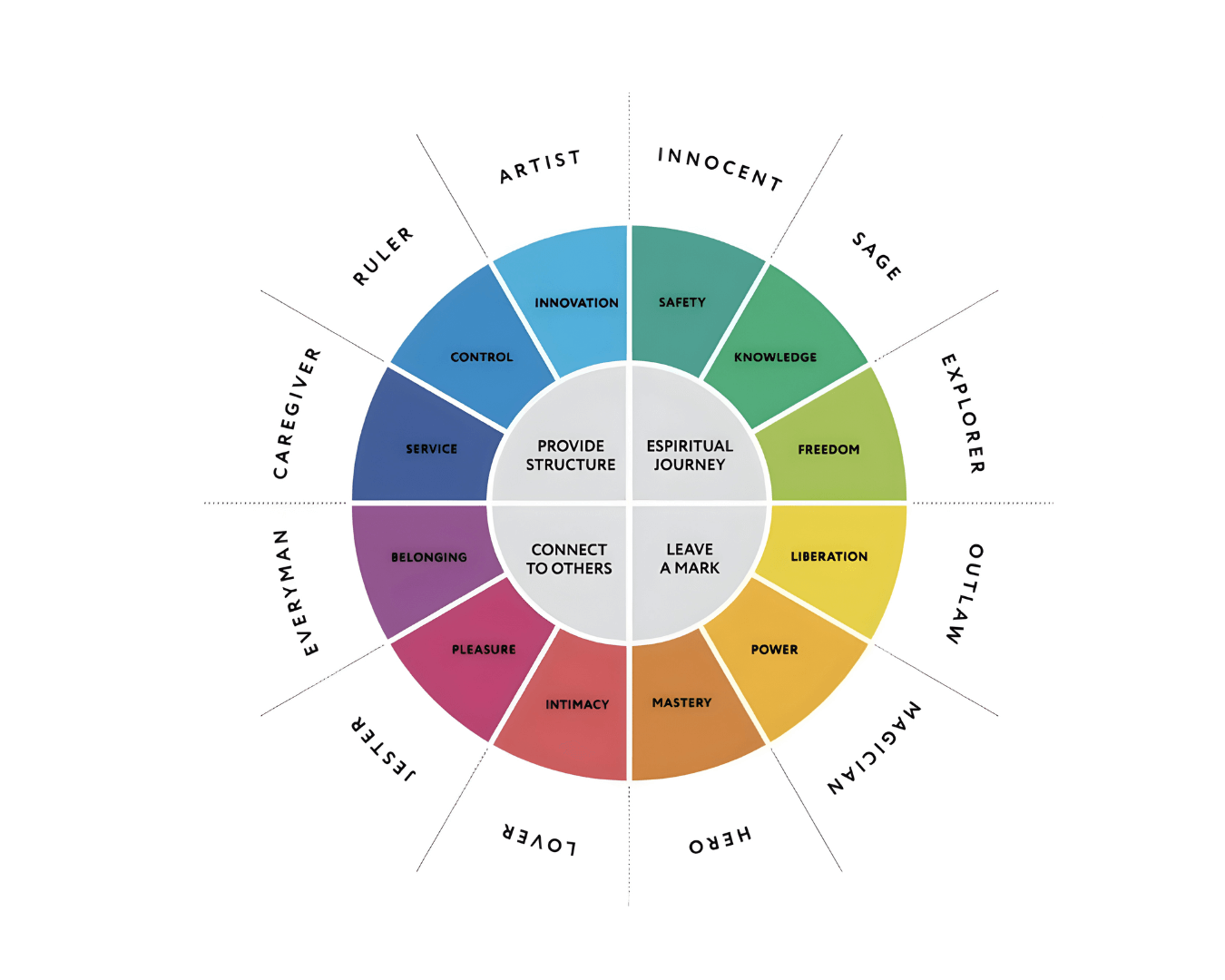
This model isn’t meant to categorize students—it simply helps us recognize patterns so we can respond more skillfully when something isn’t landing.
How Each Archetype Tends to Learn Best
Below is a simple overview of how different archetypes often learn most effectively. Remember: students are usually blends, and archetypal expressions can shift over time.
The Caregiver
Learns best through: Safety and emotional support
Needs: Reassurance, permission to rest
Teaching support:
- Consent-based language
- Normalizing modification
- Gentle pacing
The Explorer
Learns best through: Choice and self-discovery
Needs: Autonomy and curiosity
Teaching support:
- Reflective questions
- Exploration over correctness
- Multiple options
The Sage
Learns best through: Understanding and clarity
Needs: Context and explanation
Teaching support:
- Anatomy and philosophy
- Clear reasoning
- Inquiry-based teaching
The Hero
Learns best through: Challenge and progression
Needs: Goals and measurable growth
Teaching support:
- Progressive sequencing
- Clear benchmarks
- Positive reinforcement
The Lover
Learns best through: Connection and sensory experience
Needs: Emotional engagement
Teaching support:
- Evocative language
- Breath and rhythm
- Emphasis on feeling
The magician
Learns best through: Insight and transformation
Needs: Meaning and internal shifts
Teaching support:
- Breathwork and meditation
- Reframing experiences
- Moments of awareness
The Creator / Artist
Learns best through: Imagination and expression
Needs: Inspiration and creativity
Teaching support:
- Imagery and storytelling
- Creative sequencing
- Interpretive freedom
The Everyperson
Learns best through: Relatability and inclusion
Needs: Belonging and accessibility
Teaching support:
- Everyday language
- Shared experience
- Community-building cues
The Innocent
Learns best through: Simplicity and consistency
Needs: Calm and predictability
Teaching support:
- Fundamental practices
- Clear, simple cues
- Consistent structure
The Rebel / Outlaw
Learns best through: Autonomy and liberation
Needs: Choice and empowerment
Teaching support:
- Questioning rigid “shoulds”
- Encouraging self-trust
- Breaking limiting norms
The Jester
Learns best through: Play and joy
Needs: Lightness and engagement
Teaching support:
- Humor
- Playful exploration
- Energy shifts
The Ruler
Learns best through: Structure and leadership
Needs: Clarity and boundaries
Teaching support:
- Clear expectations
- Consistent pacing
- A strong container
Teaching With Archetypal Awareness
You don’t need to perfectly identify each student’s archetype. Archetypal awareness simply gives you another lens—one that helps you notice when something isn’t landing and offers alternatives.
When you teach with this awareness:
- You stay responsive instead of rigid
- You expand beyond your own preferences
- You support deeper learning and integration
The most effective teachers aren’t those who teach one way—they’re the ones who can shift how they teach without losing who they are.
Bringing the Series Full Circle
This post completes the three-part archetype series:
- Blog 1: Teaching authentically through archetypal awareness
- Blog 2: Discovering your yoga teaching archetype
- Blog 3: Applying archetypes to how students learn
When you understand who you are, how you teach, and how your students learn, teaching becomes less about performance and more about connection.
✨ Teach from your truth. Expand your toolkit. Meet your students where they are.
Ready to Refine These Skills?
Learning to teach across nervous systems, learning styles, and lived experience takes time, practice, and reflection.
These capacities—adaptability, perceptiveness, and embodied intelligence—are central to our 300-Hour Advanced Yoga Teacher Training, where teachers deepen not only what they teach, but how they teach.

Christina Raskin
You Love Yoga, We Love Yoga—Let’s Stay Connected
Get yoga tips, a little inspiration, and friendly emails—because yoga is better with friends.
🔒 No spam. No selling your data. Ever.